
Tampa International Airport gears up for the 2025 Atlantic hurricane season
Forecasters within NOAA’s National Weather Service predict above-normal hurricane activity in the Atlantic basin this year.
Tampa International Airport and its federal partners are preparing for what forecasters predict will be an active hurricane season in the Atlantic, which runs from June 1 to Nov. 30.
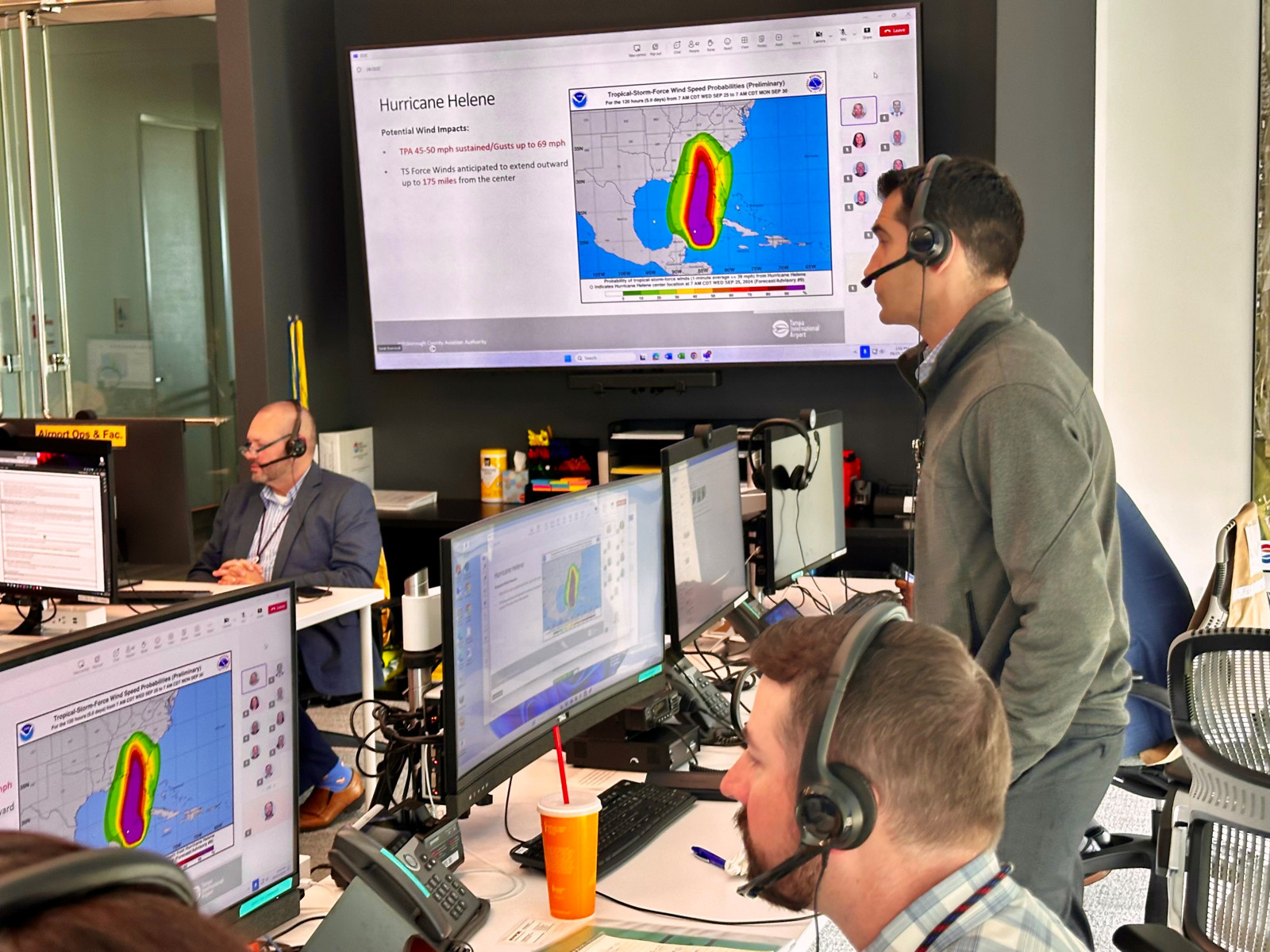
Holding its annual hurricane disaster preparedness exercise last week, TPA reviewed its plans and practiced its response to a major hurricane and the steps needed to protect the Airport ahead of a storm. While every hurricane is different, TPA's main objective when facing an oncoming hurricane is to protect its passengers and employees and shore up its facilities from the impacts of high winds and storm surge.
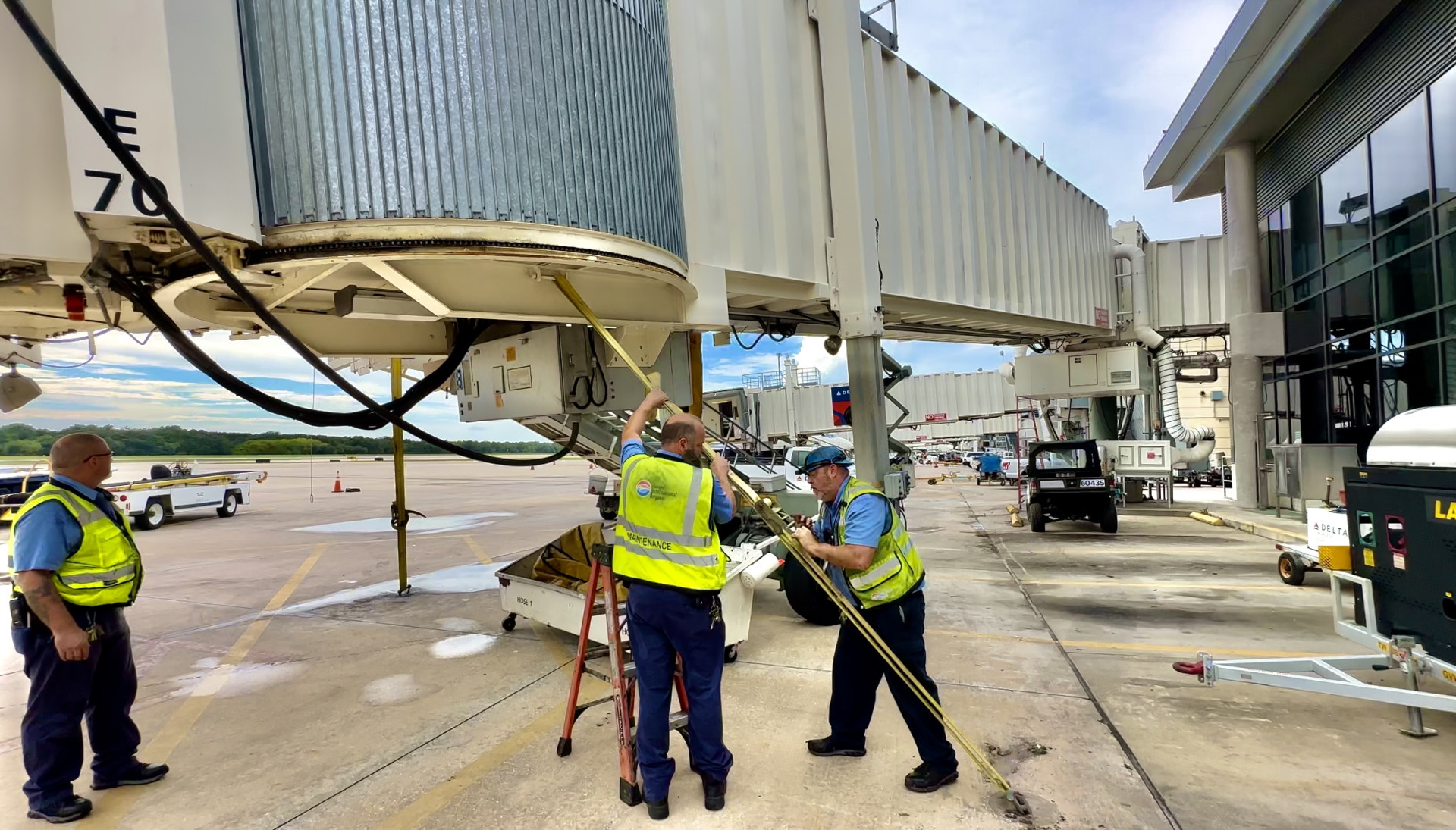
Closing an airport and bracing for a disaster is a complex, time-consuming process that takes around-the-clock efforts by multiple Airport departments and employees. Ahead of any storm, the Airport must begin the massive task of securing passenger boarding bridges, shuttles and aircraft ground equipment before tropical storm force winds arrive. Airlines also need enough time to reposition their planes out of harm’s way, meaning the last flights need to depart well before the storm’s impacts arrive.
“The better we can button down the Airport and protect our infrastructure ahead of the storm, the faster we can reopen after,” said Tampa International Airport’s Chief Operating Officer, John Tiliacos.
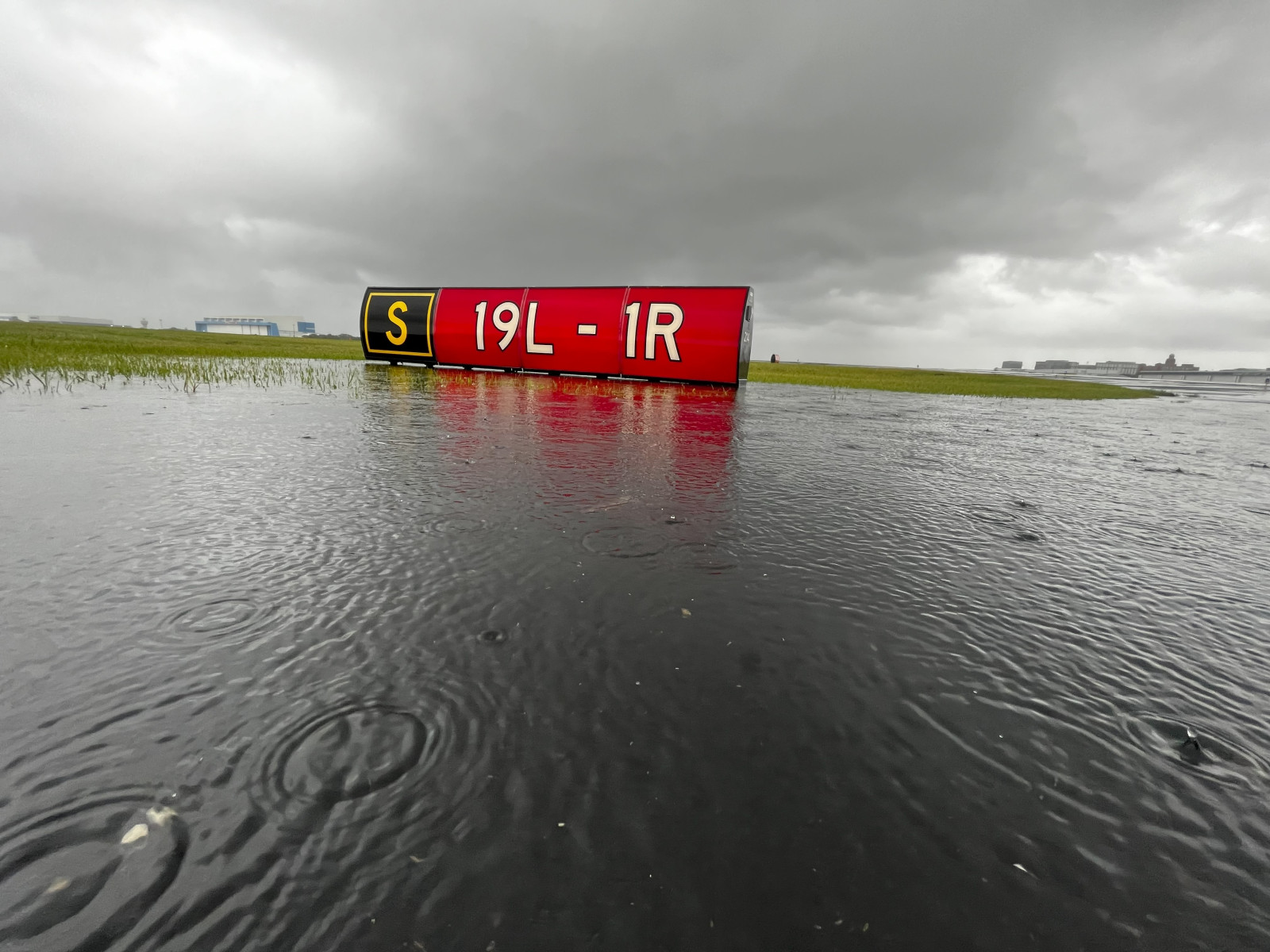
Last year, TPA was forced to suspend Airport operations twice ahead of back-to-back storms with Hurricane Helene in late September and Hurricane Milton in early October.
Both storms impacted the Airport and TPA's surrounding communities with heavy rain, storm surge and high winds.
For the 2025 season, the National Oceanic and Atmospheric Administration is predicting a 60% chance of another above-normal hurricane season.
The agency is forecasting a range of 13 to 19 total named storms with winds of 39 mph or higher. Of those, six to 10 are forecast to become hurricanes including three to five major hurricanes with winds of 111 mph or greater.
If a tropical storm or hurricane once again threatens the west coast of Florida, those with travel plans or looking to evacuate should closely monitor the weather forecasts and plan to adjust their schedules, keeping in mind that the Airport would likely close at least a day ahead of the storm’s impacts.
Passengers should check directly with their airlines for information on flight cancellations or to rebook, with many airlines waiving change fees ahead of major weather events to allow passengers to leave on an earlier flight.
It’s also important to know that Tampa International Airport is not a hurricane shelter. Those still in the terminal when TPA suspends operations will be directed to a local Hillsborough County shelter. TPA’s parking garages will also be closed to the public ahead of a storm.
Travelers should keep in mind that it doesn't necessarily have to be a hurricane or tropical storm to alter itineraries. Summer brings the beginning of storm season in Florida, and even a typical afternoon thunderstorms can have a big impact on flight delays in and out of Florida.
Here are some tips on how to navigate travel during the rainy months between mid-May and October:
CHECK THE FORECAST: Before coming the Airport, be sure to check the weather forecast for more than just the day you’re flying. Check the entire course of your trip, both here and at your destination. You’ll get an indication of any problems that may come up, or whether a storm system is heading your way during your travels.
CALL YOUR AIRLINE: Your airline will always have the latest updates on your flight, so if it looks like your plans may be affected, call your air carrier ahead of time. The airline will have current information about your route and will be informed when flight operations will be affected. If your airline has an app or online chat feature, those can be faster than using the phone when hundreds of people are looking to be rebooked.
BE AN EARLY BIRD: You should always aim to be at the Airport two hours before a domestic flight and three hours before an international flight, but it’s especially true during Tampa Bay’s normal, rainy summer season. Thunderstorms tend to kick in across the region during the afternoon, causing possible delays and cancellations. To avoid these storms, try to schedule your flights earlier in the morning before the rain typically arrives.
MAKE A PLAN: Have a plan in place for family, pets, property and more in case you can’t easily get where you want to be in the event of a delay or cancellation. Considering what you may do in such circumstances should be part of revisiting your emergency plan each season. The Airport is not equipped to serve as a public shelter in the event of a closure, so please don’t bring your pets and cars on-site to stay safe from a storm. Information about emergency shelters, evacuation zones, storm preparation and more is available from the Hillsborough County government’s storm safety webpage. TPA Police Officers and Guest Experience representatives will help direct travelers who need shelter to county-run resources.
CHECK SOCIAL MEDIA: If a tropical storm or hurricane threatens TPA, the Airport will share the latest information on its X account (formerly Twitter) at x.com/FlyTPA . Updates will also be posted at TampaAirport.com.
BE PATIENT: No one likes it when foul weather ruins travel plans, but please try not to take it out on others. Airline and Airport staff want to help, but please remember that they are trying to help everyone else, too. Visit our Information Desk on the third floor of the Main Terminal to learn about helpful amenities like our Traveler’s Aid station, where our pet relief areas are located and to learn more about our expansive shopping and dining locations.