A trip back in time: 10 historic spots sharing hints of TPA's past
Some of TPA's coolest history is hidden in plain view. You just have to know where to look.
Tampa International Airport’s current terminal opened more than 50 years ago in 1971, but the airfield’s history goes back much further. In fact, TPA is approaching its 100th anniversary in a few years after it was dedicated as Tampa’s municipal airport on February 22, 1928.
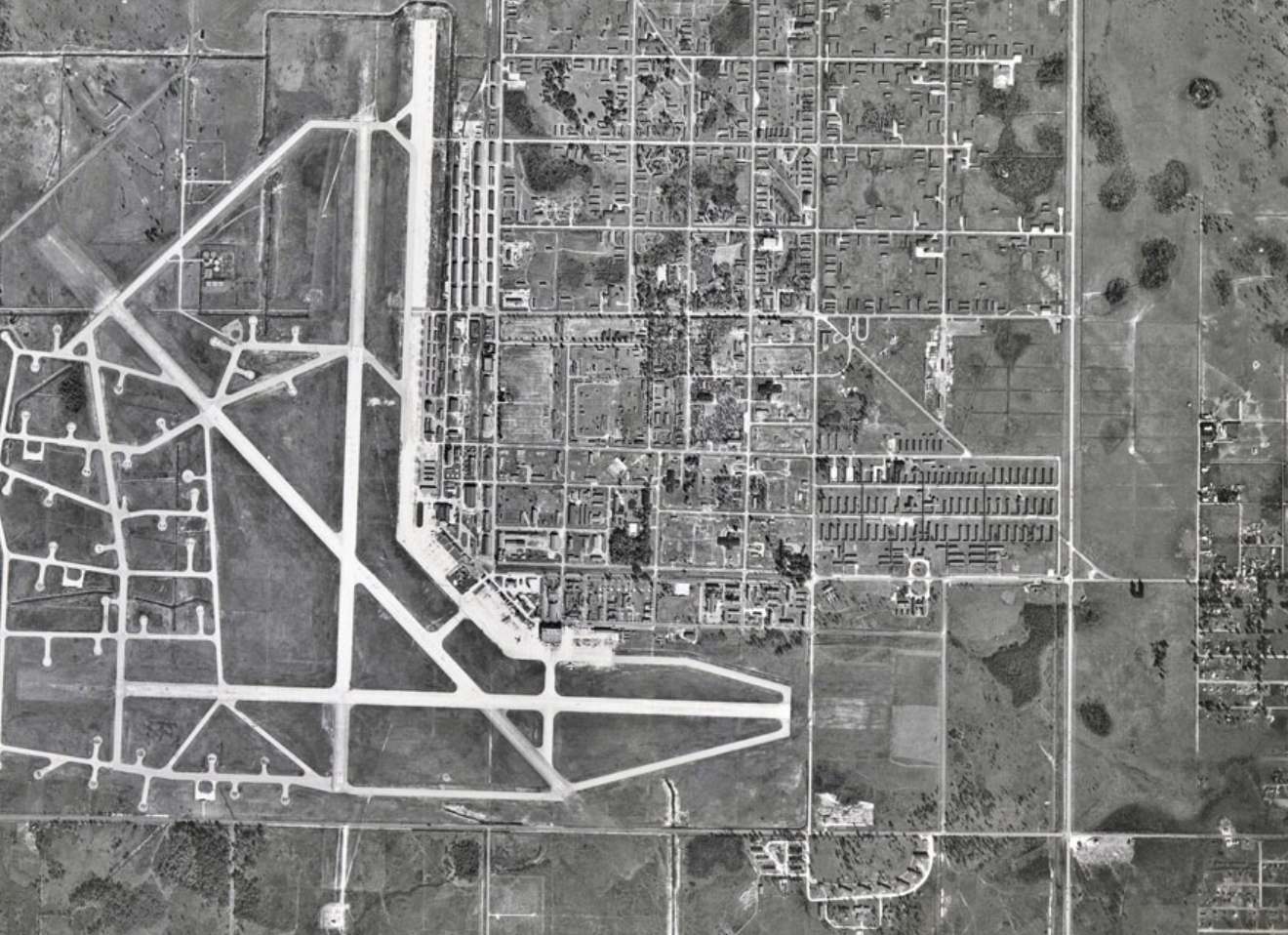
Originally known as Drew Field, the airport was named after Tampa cattleman and land developer John H. Drew, who owned the land on which Tampa International Airport would eventually be built. During World War II, the site was developed as Drew Army Airfield and served as headquarters for the III Fighter Command. The facility had 25,000 personnel and was a training center for the Third Air Force, preparing fighter and heavy bomber aircrews for combat.
After the war, the land was transferred back to the city, with the first international flights beginning on December 15, 1946. Ten months later, the airfield was renamed Tampa International Airport, and the rest, as they say, is history.
While TPA has transformed into the modern and beloved airport it is today, if you look around, you can still find some hints of its interesting past. Here are 10 spots around the airport that can teach us all some pretty cool history about TPA.
1) TPA’s First New Terminal
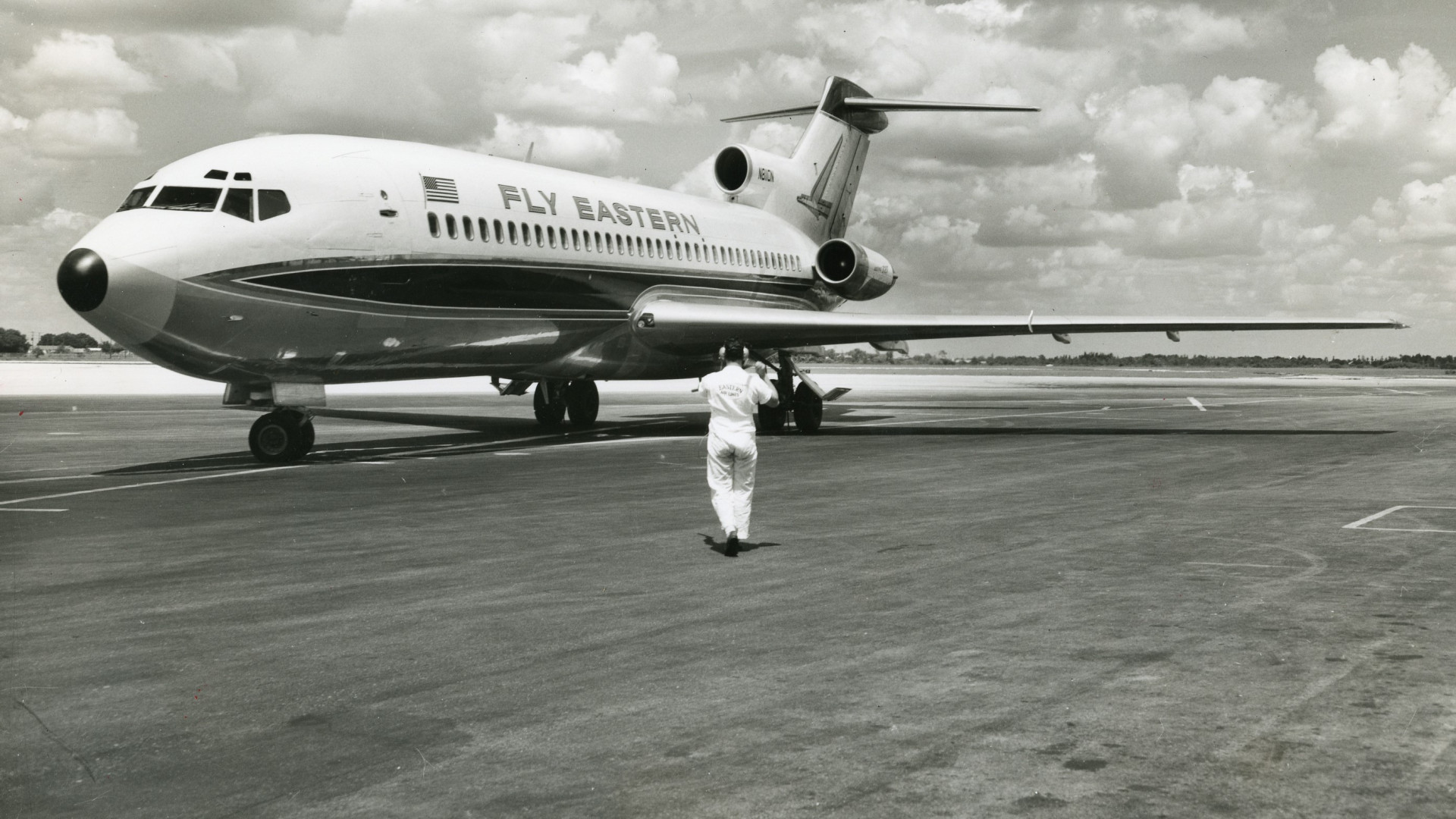
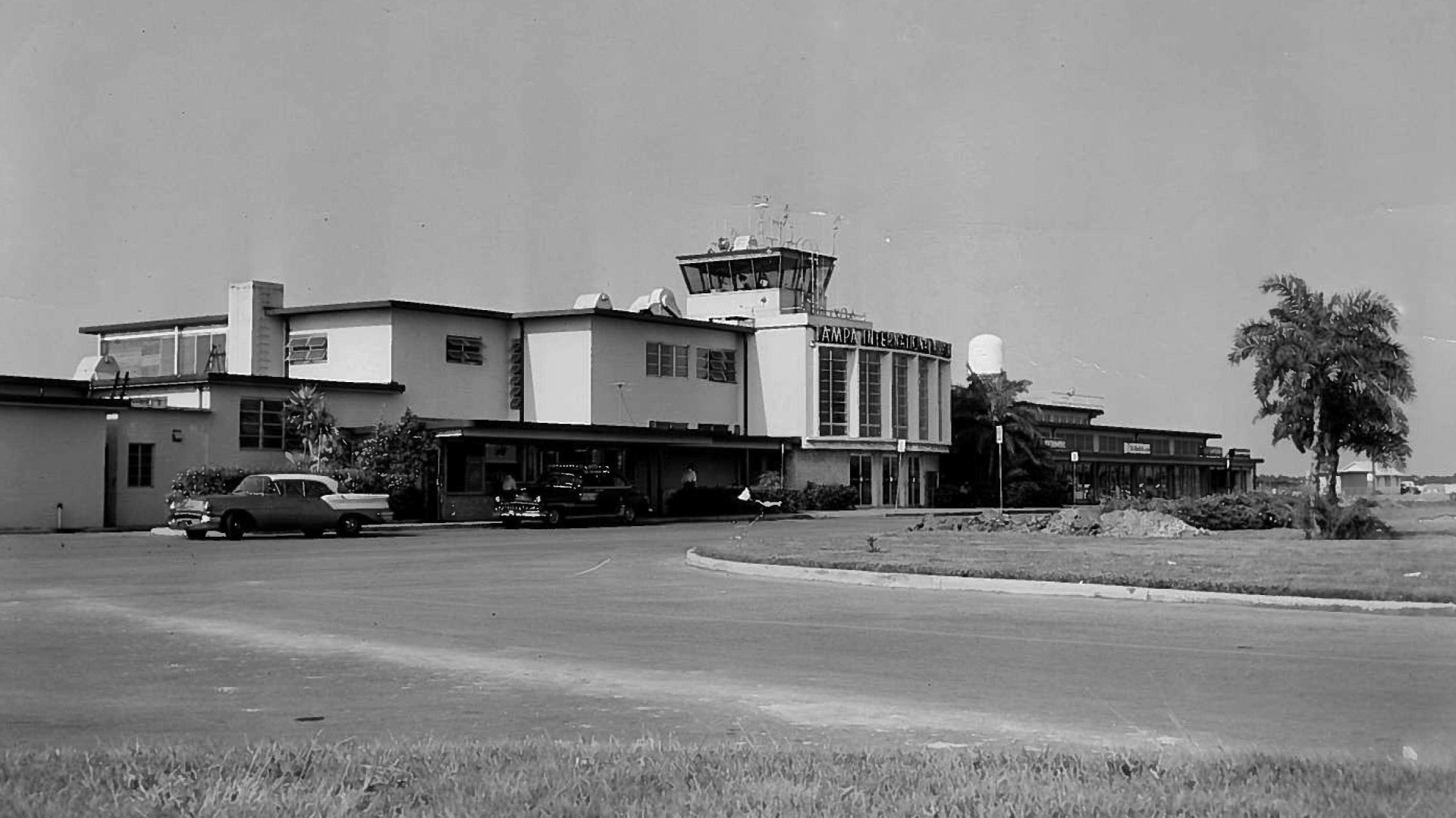
Before TPA became what everyone knows and loves today, there was a grand opening of Tampa International Airport’s first terminal designed for commercial aviation, which opened to great fanfare on August 17, 1952. The new facility replaced the old Drew Army Airfield facilities, which had been converted for commercial use as a small wooden terminal. Eddie Rickenbacker, the famed World War I ace and President of Eastern Airlines, spoke at the new terminal’s grand opening and predicted that demand for air travel in Tampa would outgrow the new facility within three years.
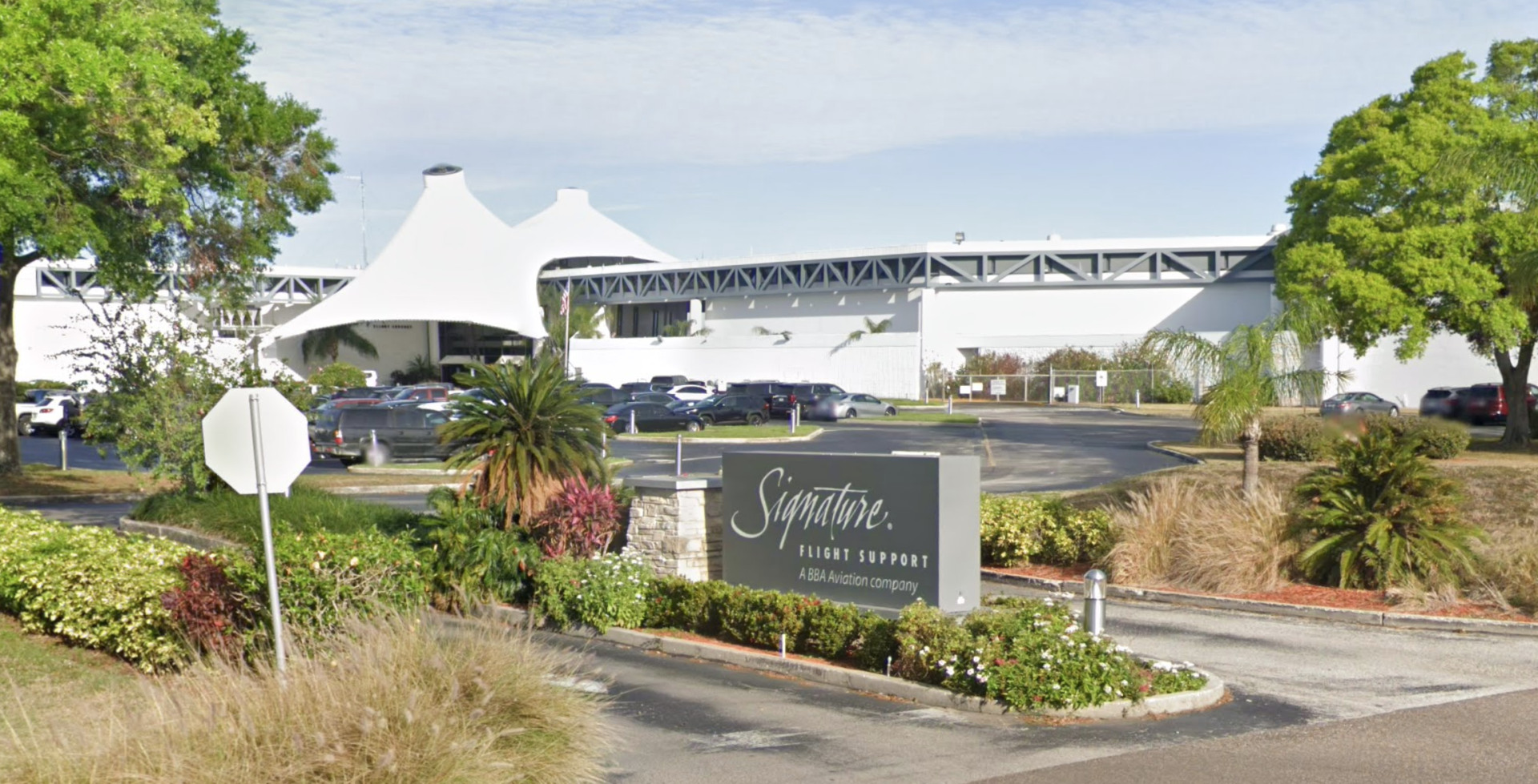
He wasn’t far off. Within 10 years, the Hillsborough County Aviation Authority was already planning for an ambitious new terminal of the future. People who flew in and out of Tampa in the ‘50s and ’60s likely remember that much smaller facility that preceded the “new” TPA that opened 1971. Today, Signature Aviation operates where TPA’s original terminal once stood, across from International Plaza near The Cheesecake Factory. The fixed-based operator handles general aviation, private jets, team charters, and even Air Force One when the President comes to Tampa.
2) Original Drew Field Taxiway
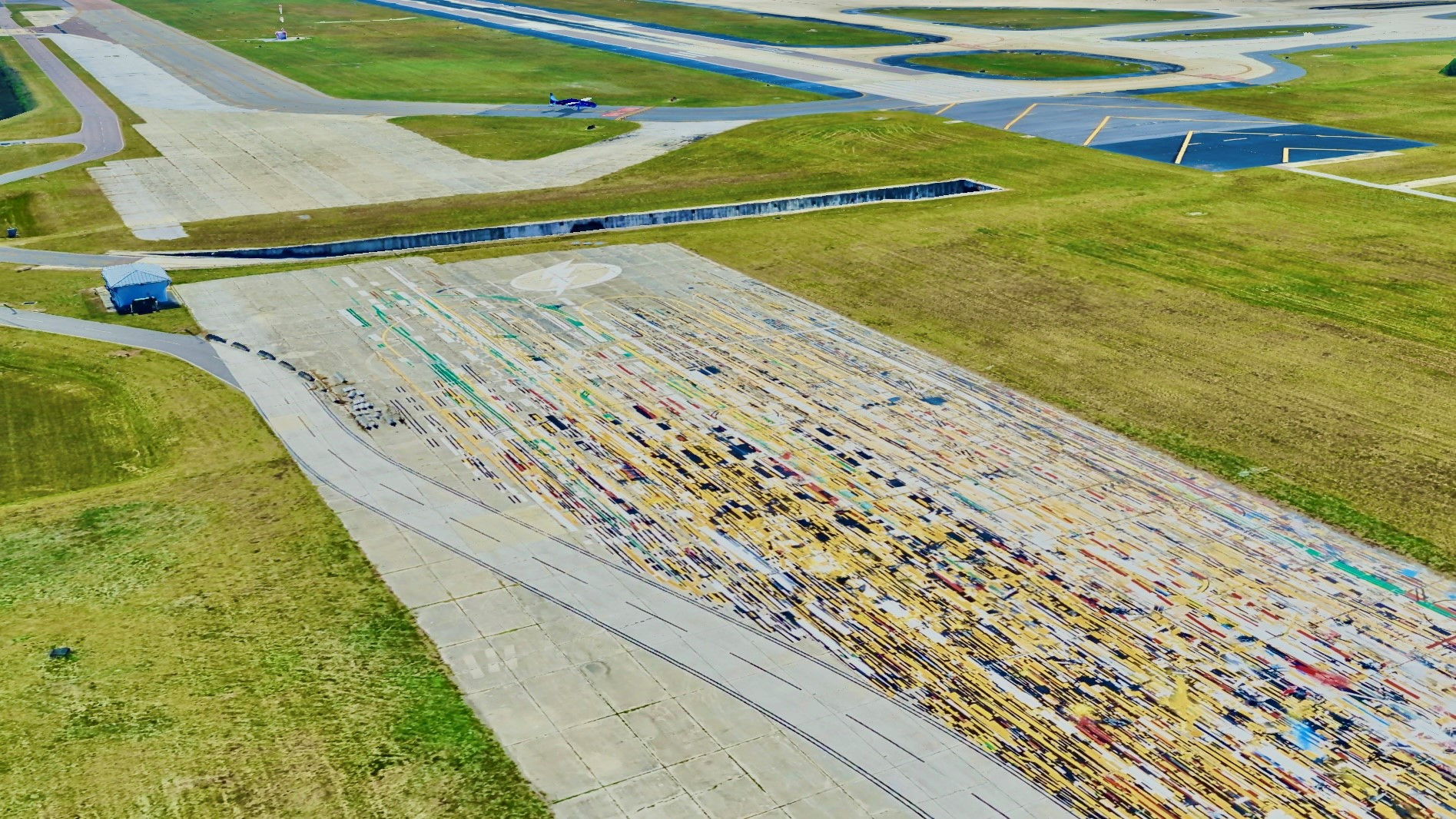
If you come into a landing from the north on TPA’s main east runway, 19L, just before touchdown, you might notice an area of cement covered in paint markings, including the Tampa Bay Lightning logo. This area is often used to test painting equipment and as a training area for airport law enforcement K-9 teams. Back in the early days of Drew Field, this area of cement was actually part of the airport’s original airfield. While no planes taxi here today, this small section of TPA history remains a colorful reminder of the past.
Drew Park
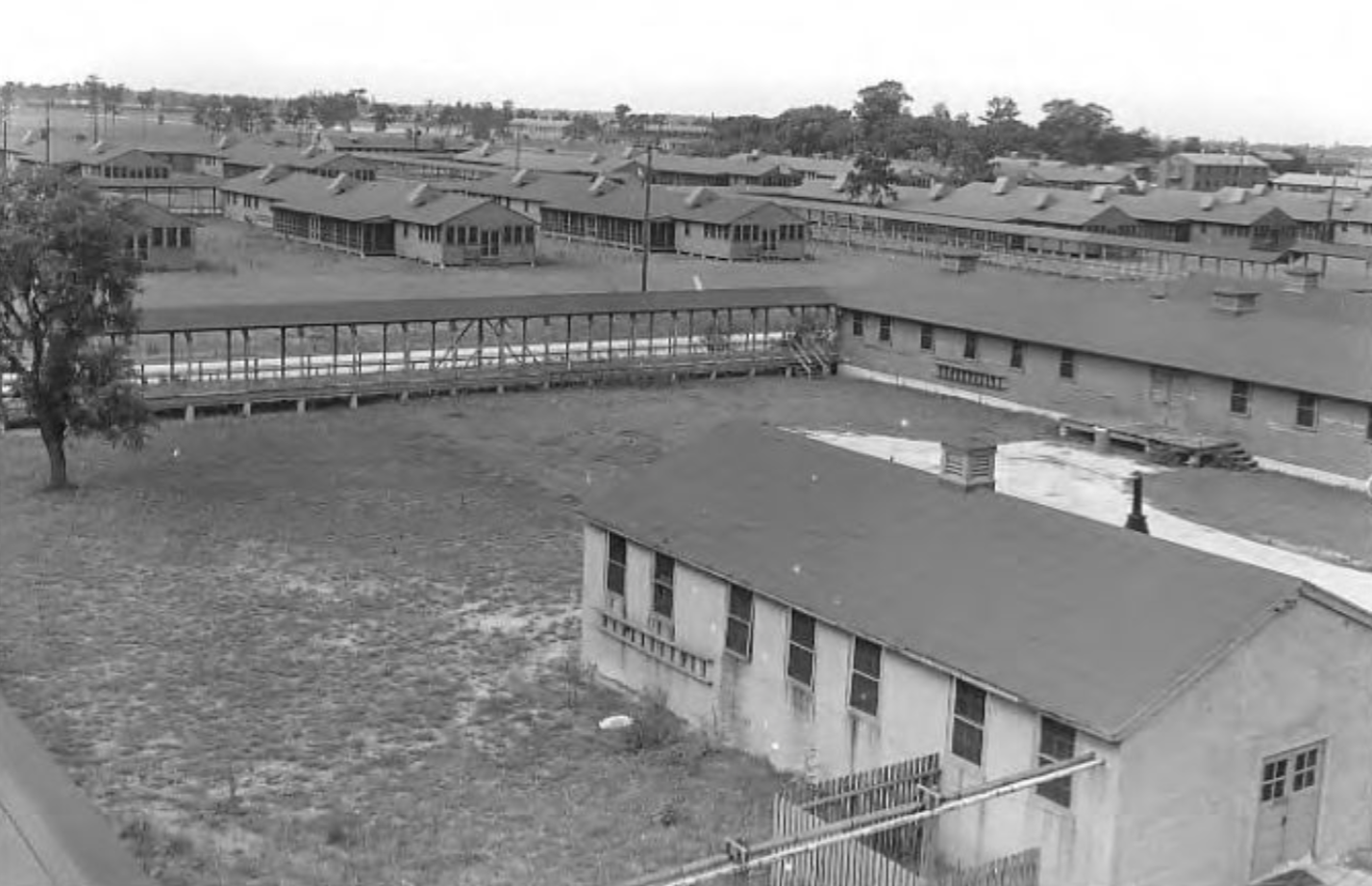
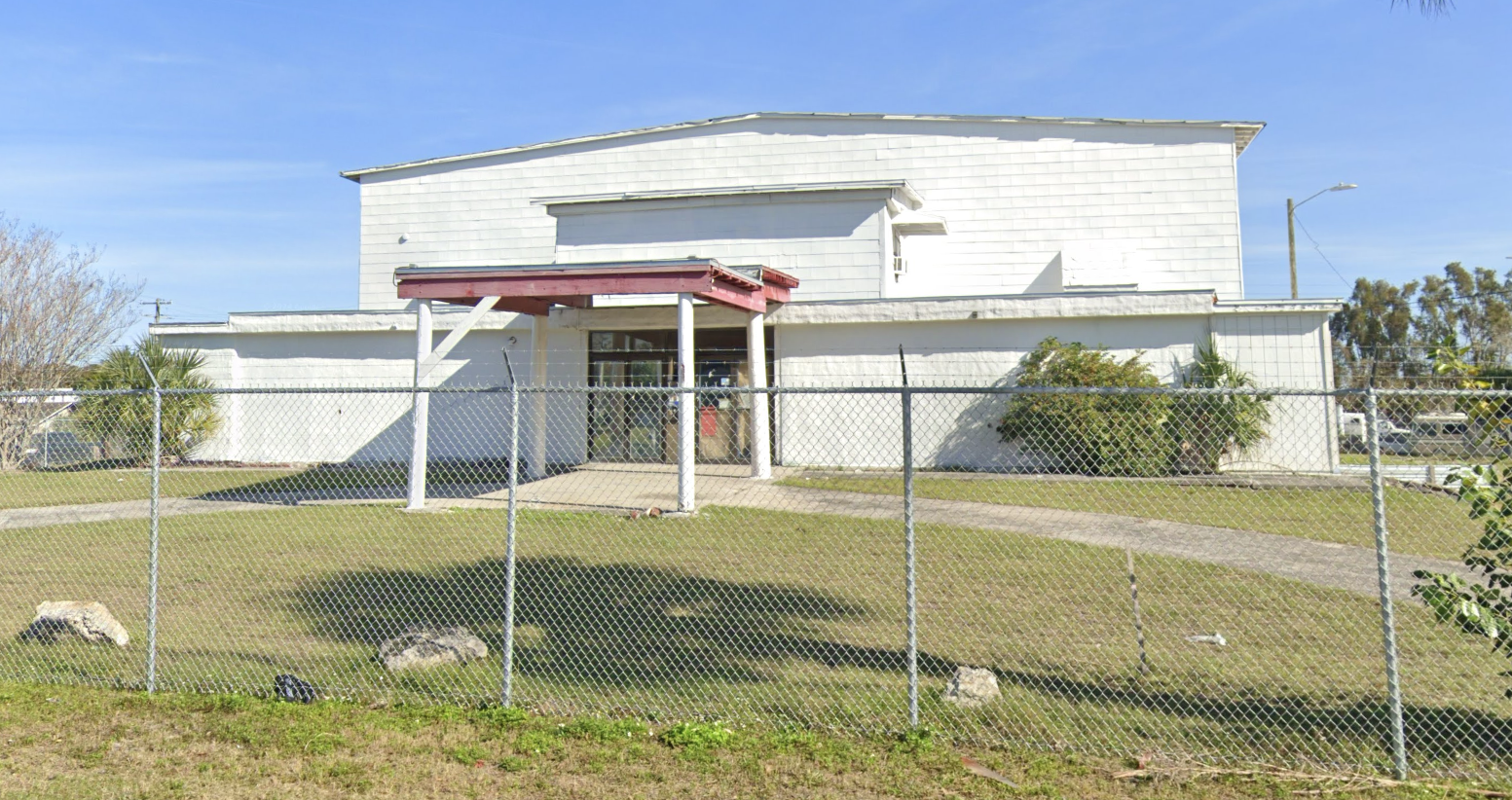
On the east side of Drew Field, the federal government developed a military base complete with barracks, field hospitals, and military offices. Today, that area is known as Drew Park and is home to Hillsborough Community College, Steinbrenner Field, and a mix of residences and local businesses. As you drive through the neighborhood, you’ll find nods to this area’s aviation history, including propellers on signs marking the entrance to the Drew Park neighborhood and even pressed into the sidewalks throughout the area. Take a closer look, and you’ll find some of the original World War II-era structures still standing today, including the original base theater located at the corner corner of West Alva and North Hubert Avenue.
Tampa International Airport Commemorative Plaque
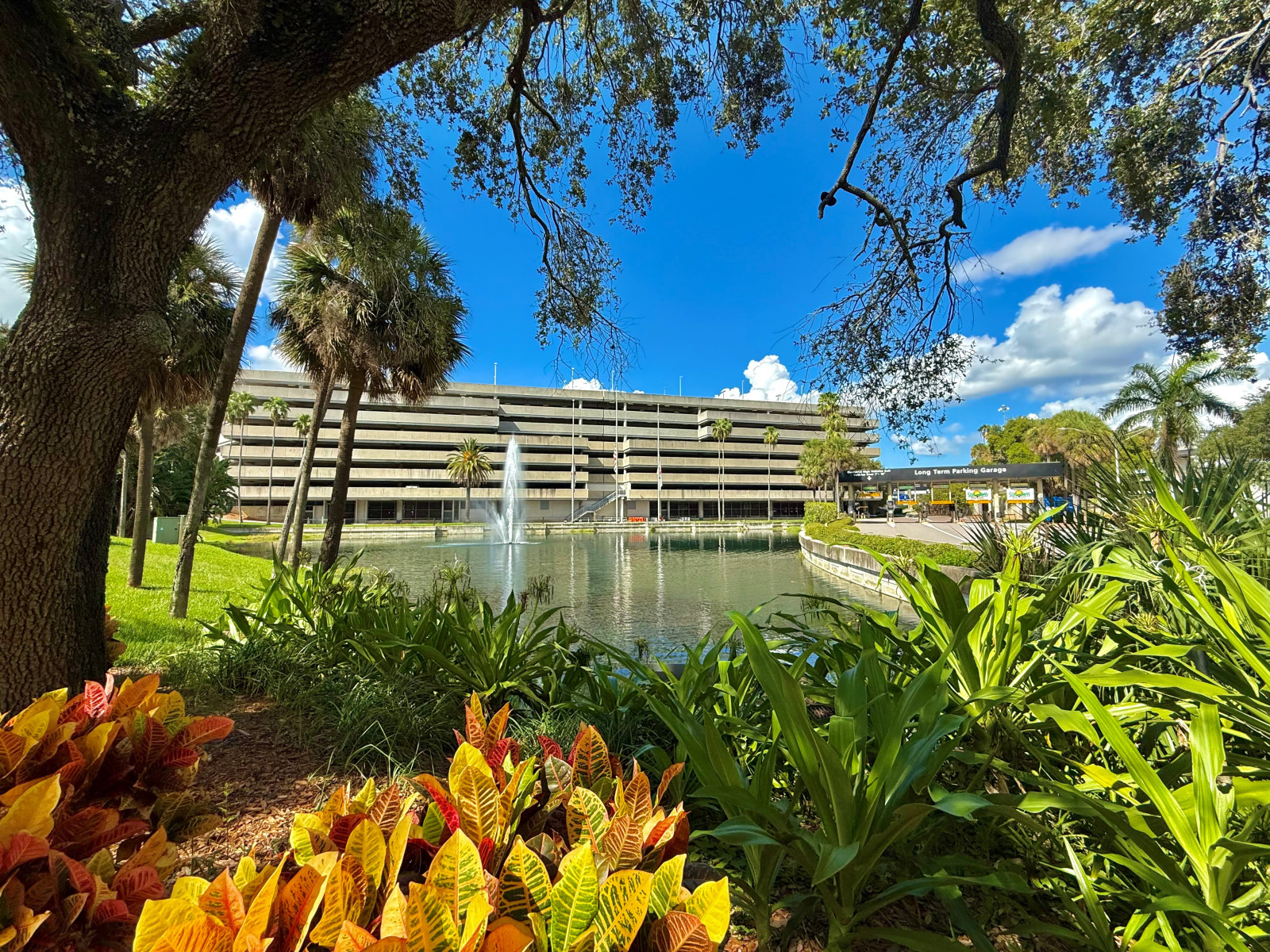
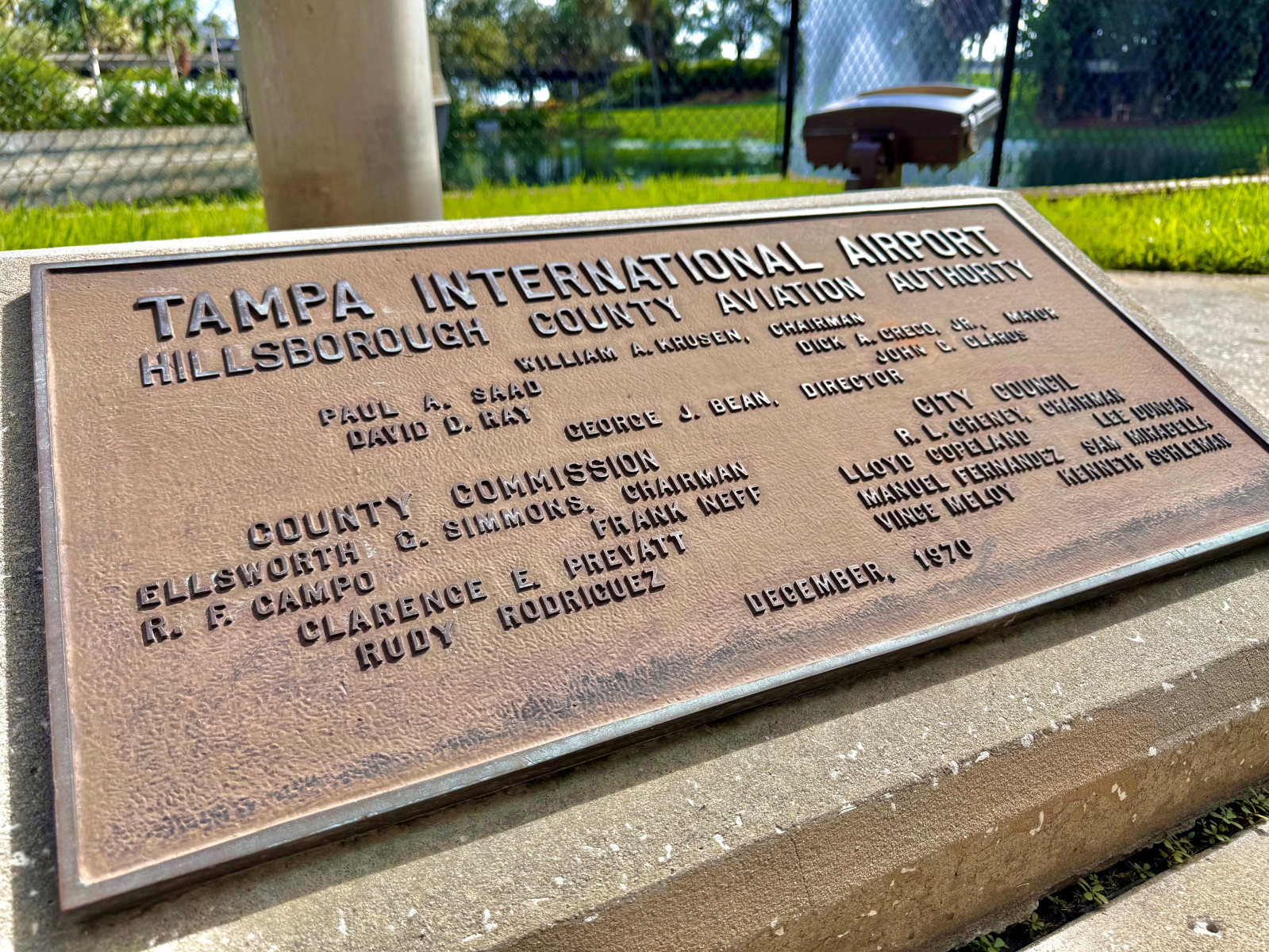
As you approach the front of Tampa International Airport’s Main Terminal, you will see three flags just in front of the Long Term Parking Garage. At the base of the flagpole flying TPA’s Spirit of Flight flag sits the Main Terminal’s original dedication plaque, dated December 1970. While the airport wouldn’t officially open until four months later on April 15, 1971, this plaque was presented to mark the substantial completion of the Main Terminal structure, listing the Hillsborough County Aviation Authority Board members, City Council, and County Commission, as well as the airport’s original director, George Bean, and a young Dick Greco, whom as Mayor would serve on the Aviation Authority Board for more than 14 years from 1967 to 1974 and again from 1995 to 2003.
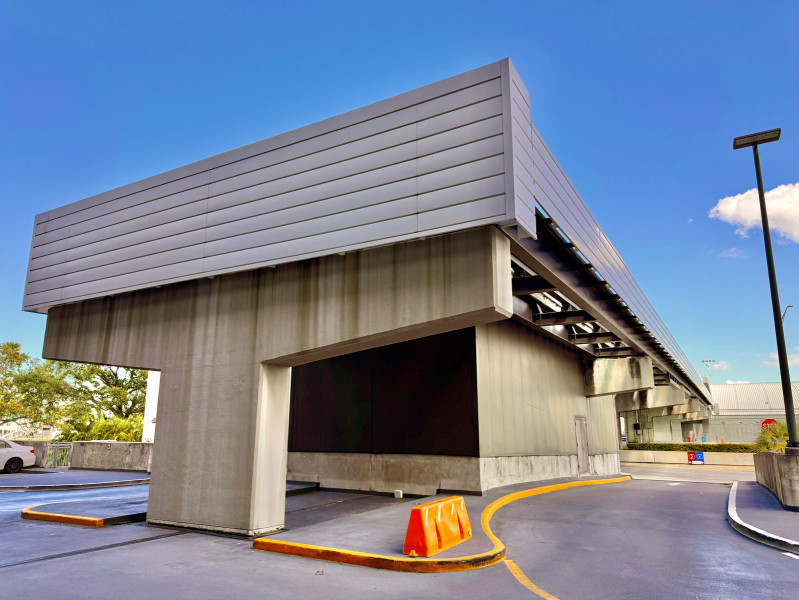
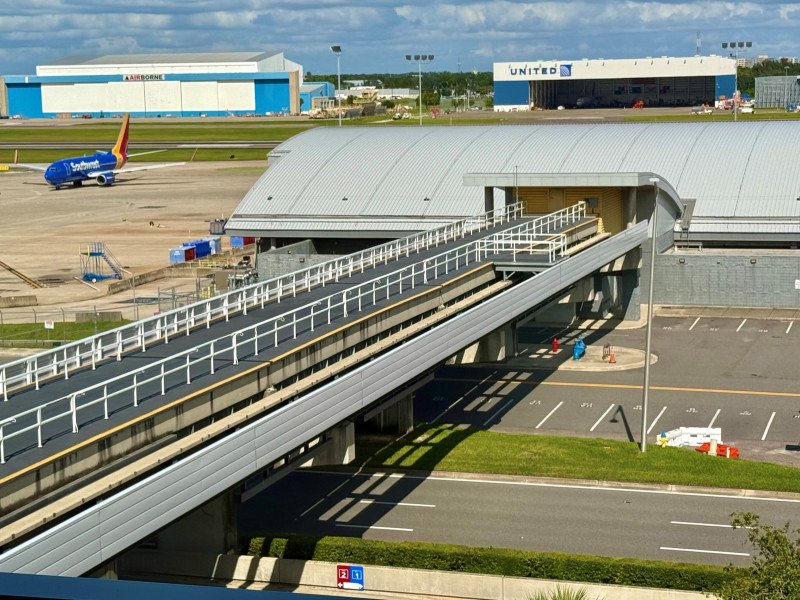
Tracks to Nowhere: TPA’s Original Airside B
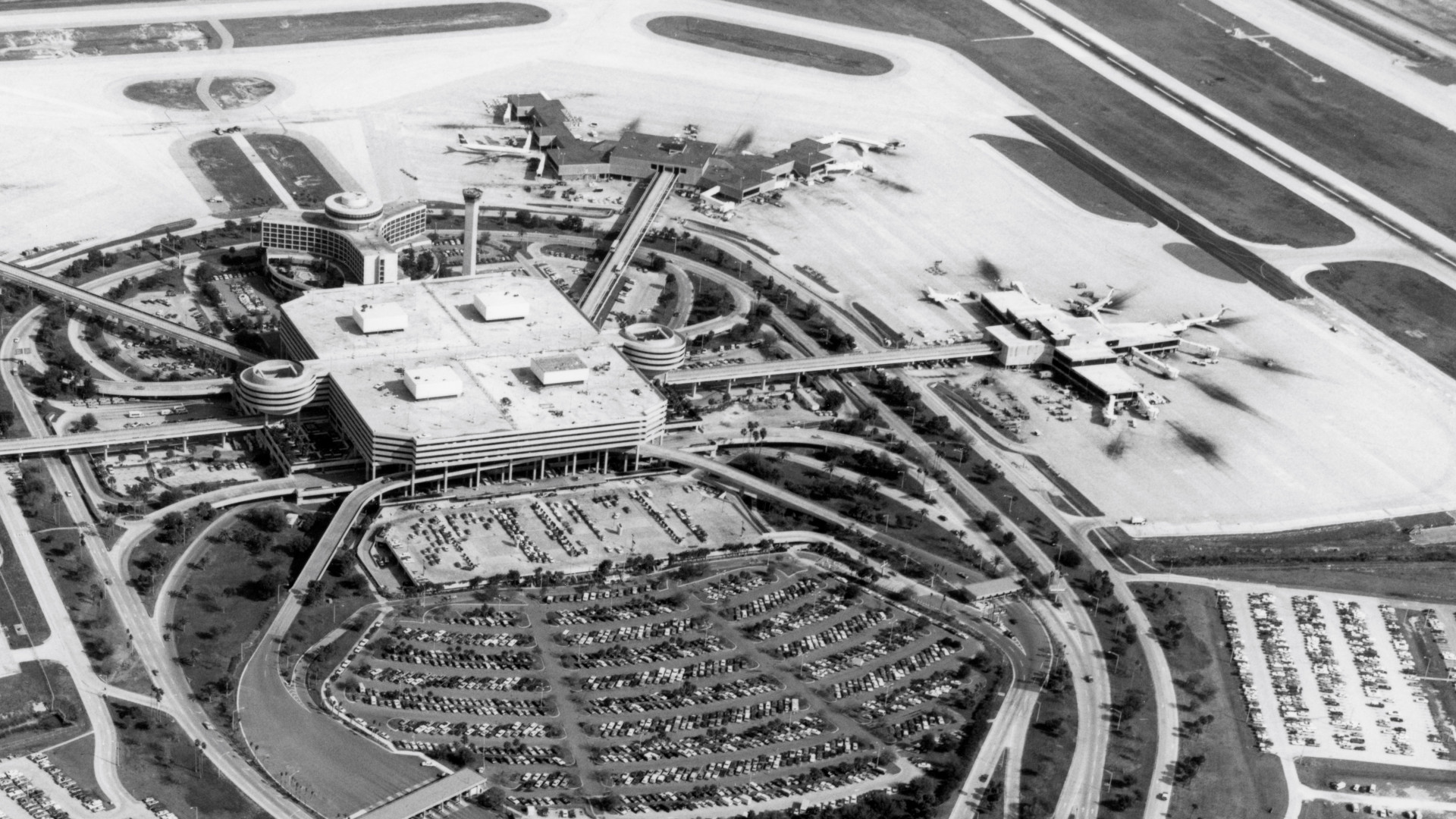
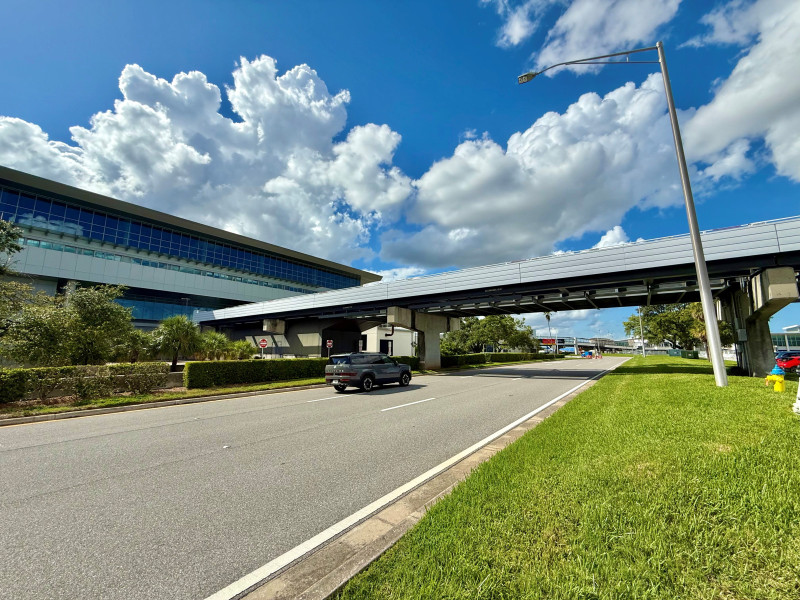
You may have noticed the bridge-like structure passing over the roadway when arriving at the airport, but you may not have noticed that it doesn’t really connect to anything. This structure was originally built as the shuttle tracks connecting the Main Terminal to the airport’s original Airside B, which served Eastern Airlines. When Eastern went out of business, Airside B was eventually demolished to make room for a much-needed baggage sorting facility. As TPA continues to grow, there are plans to possibly build a new Airside B to accommodate additional aircraft gates in the future.
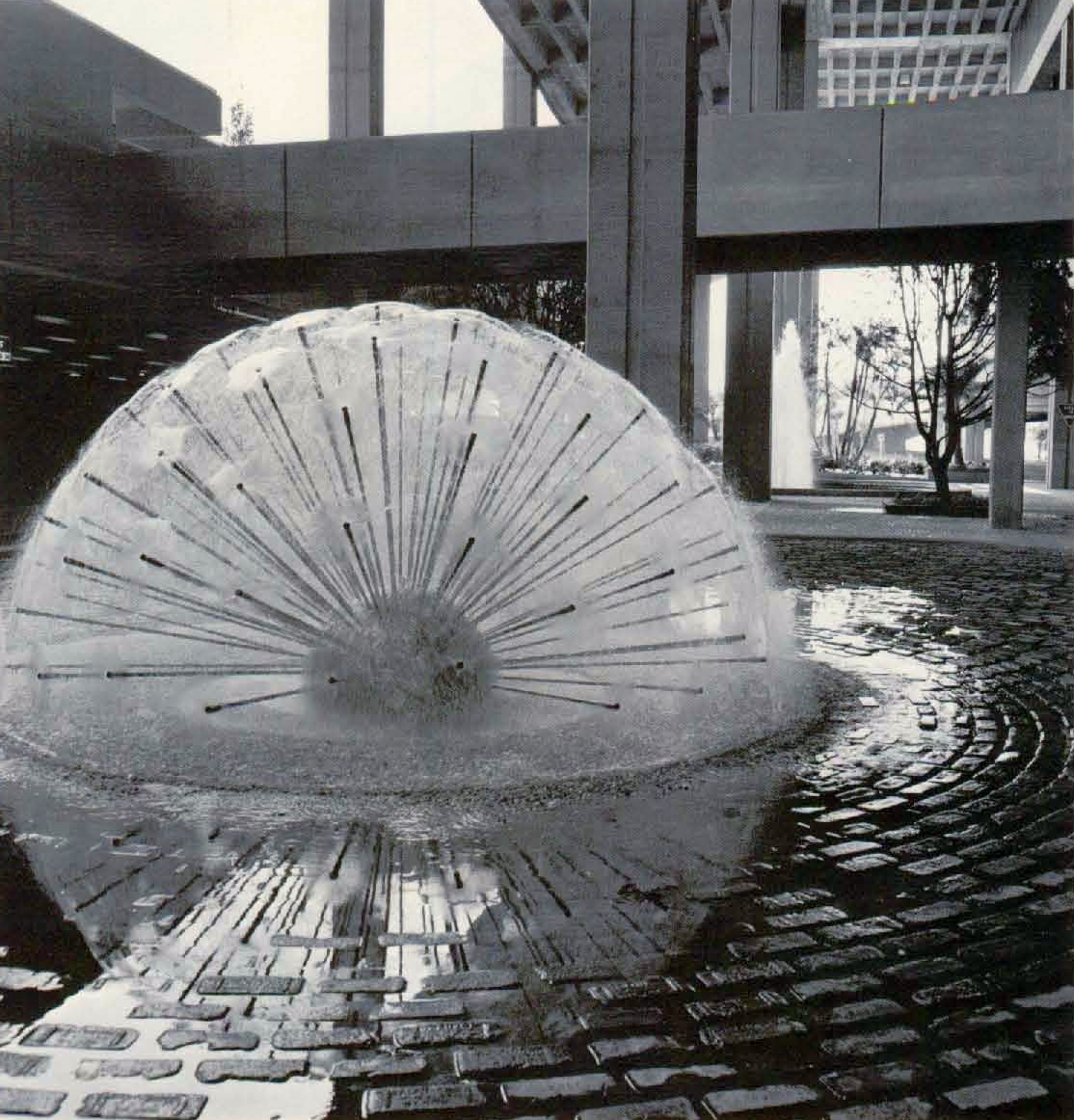
Original TPA Fountain
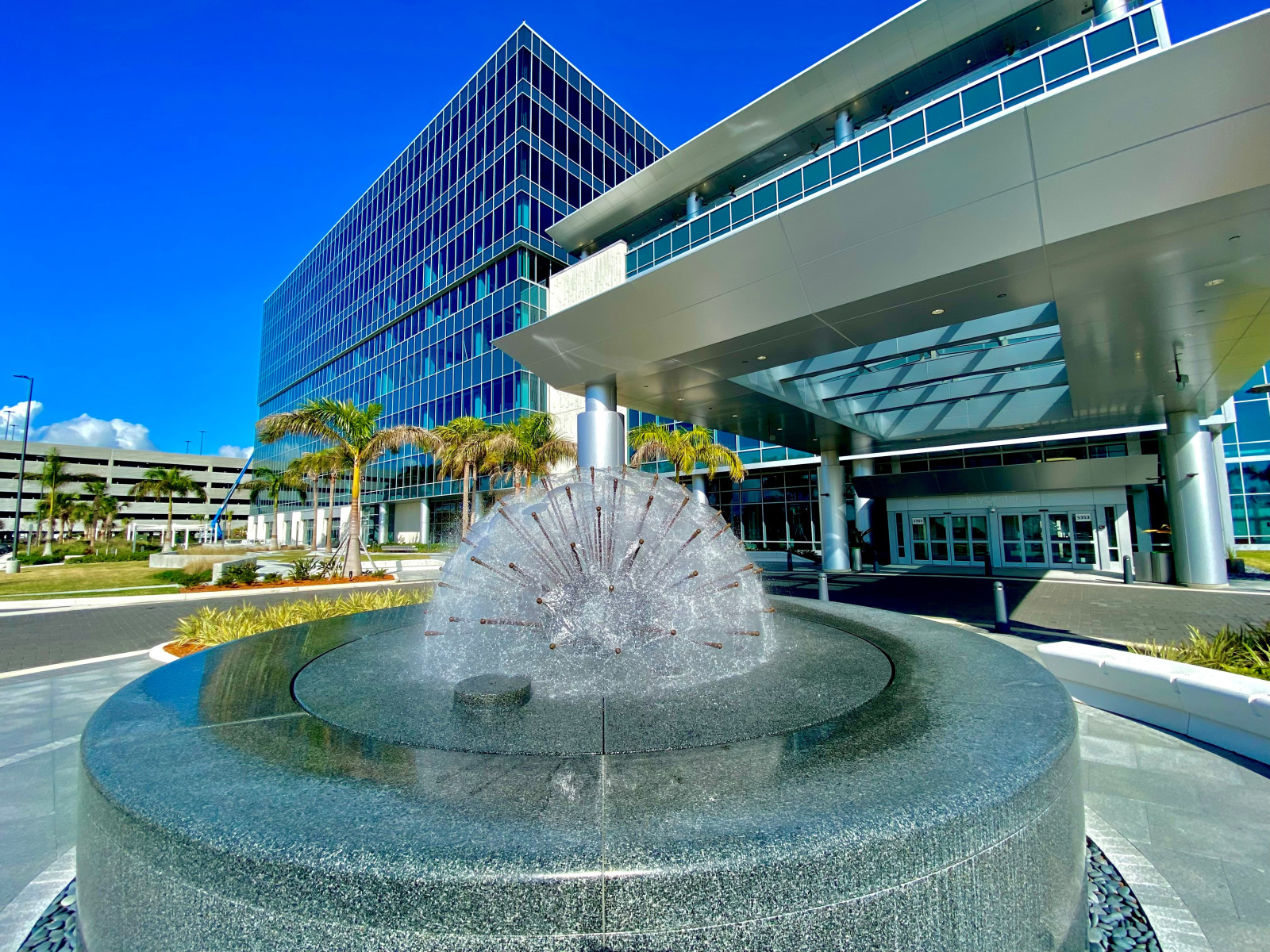
When TPA’s Main Terminal was first constructed, a series of fountains could be found just outside the baggage claim area. The 1970s-era fountains were eventually removed to make way for expansion, but one was saved and refurbished and now adorns the front entrance to the Aviation Authority’s new office building, SkyCenter One. You can spot the historic fountain if you drive just past the cell phone waiting lot on SkyCenter Drive.
Birth of the Buccaneers
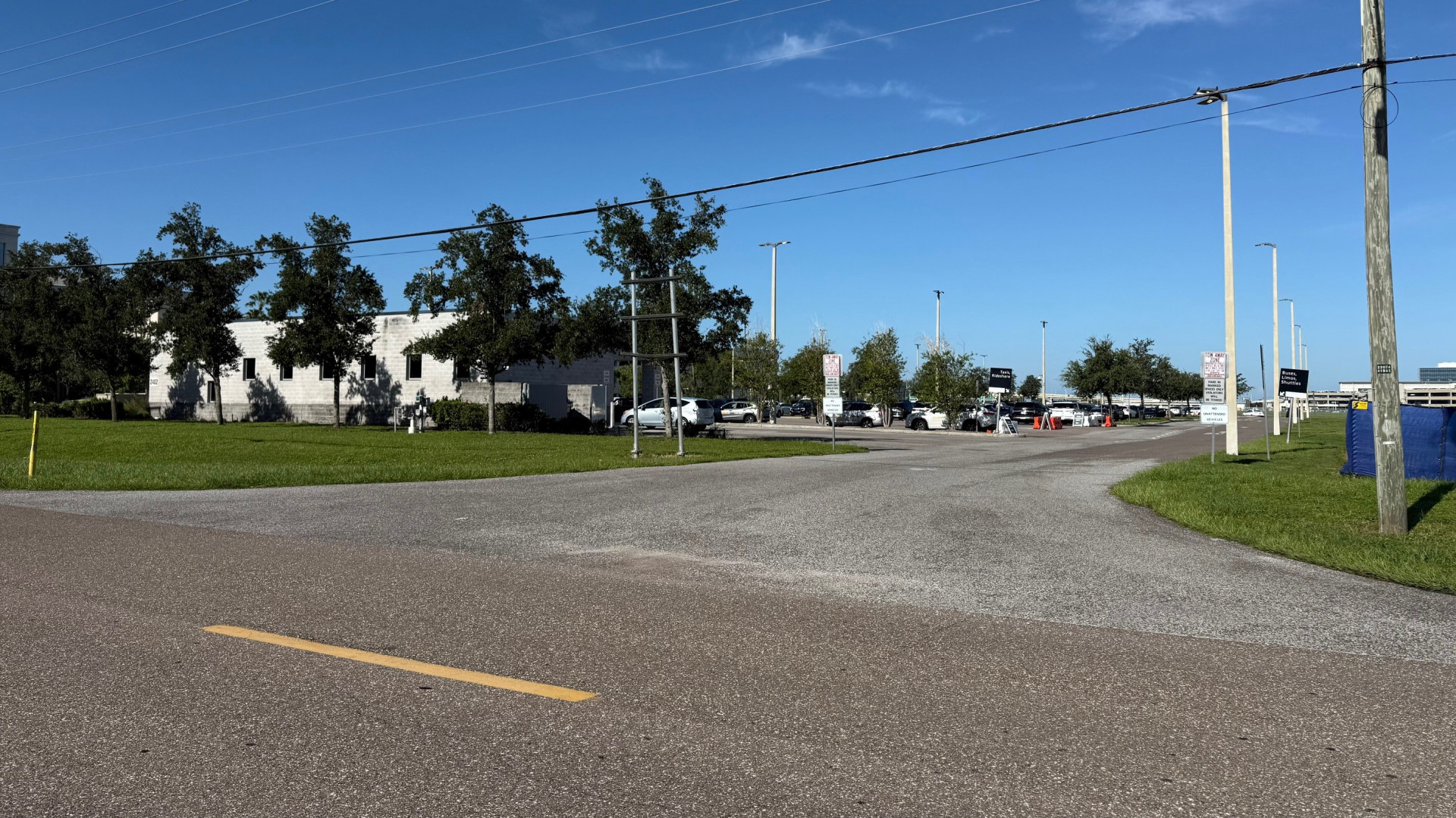
On the east side of the airport, just outside of the airfield fence line, is a large parking lot that today serves as the staging area for taxis, Uber, and Lyft drivers. Believe it or not, this lot was the original home of the Tampa Bay Buccaneers' offices and practice field known as One Buc Place. Built in 1976 to accommodate Tampa’s new NFL franchise, the Bucs trained on TPA property for nearly 30 years until the team’s new, much larger facility opened in 2006 following the demolition of the former Tampa Bay Center Mall between Raymond James Stadium and St. Joseph’s Hospital.
 TPA’s Original Art: Copper Birds
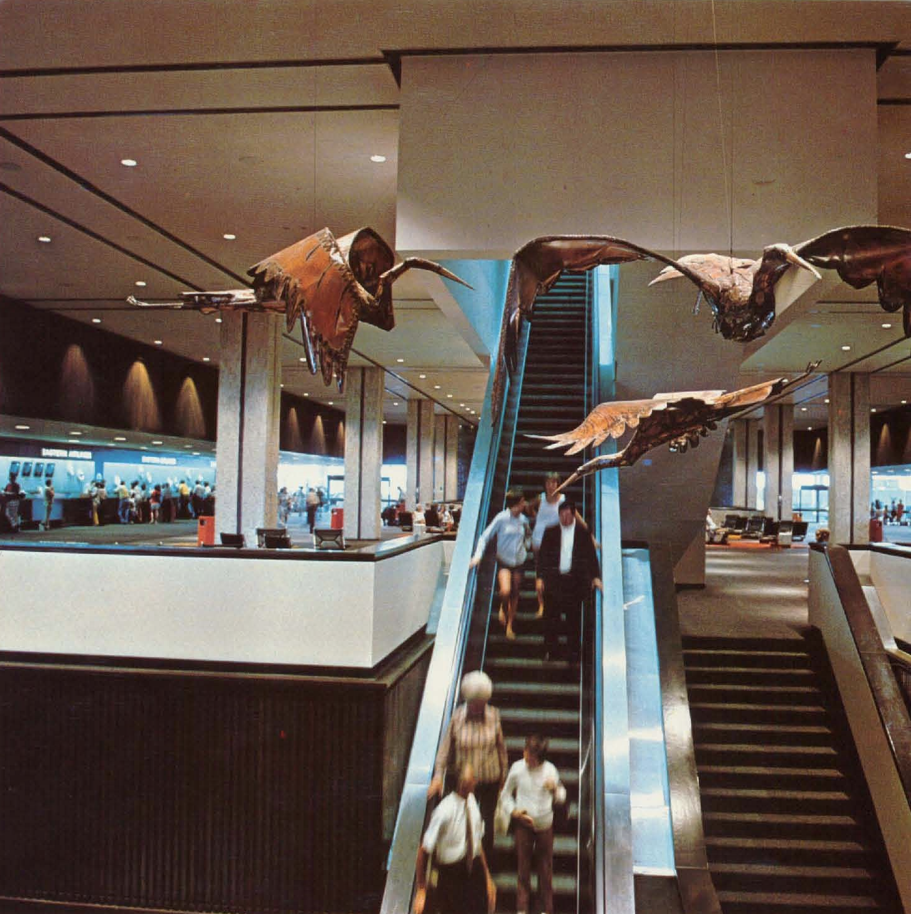
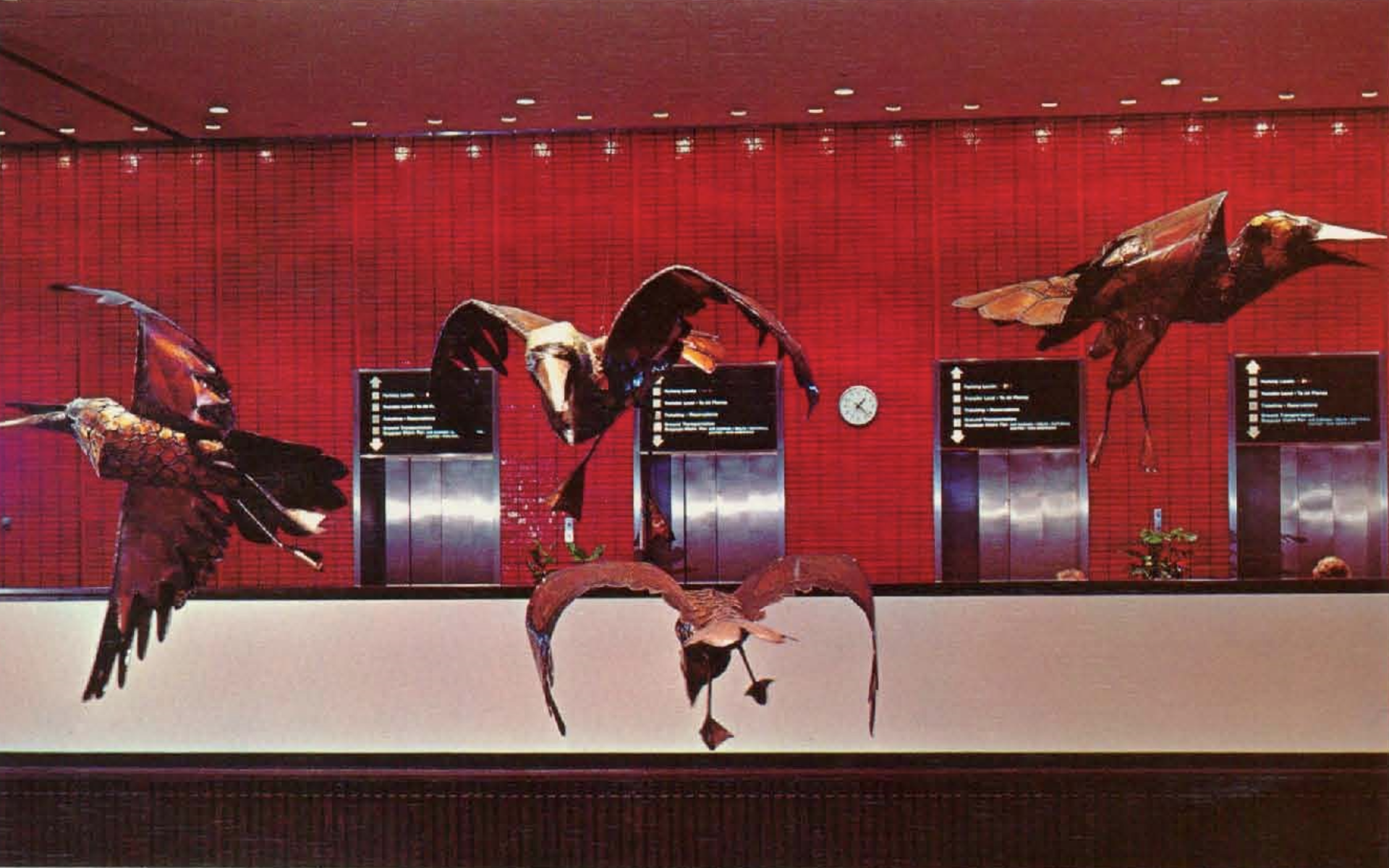
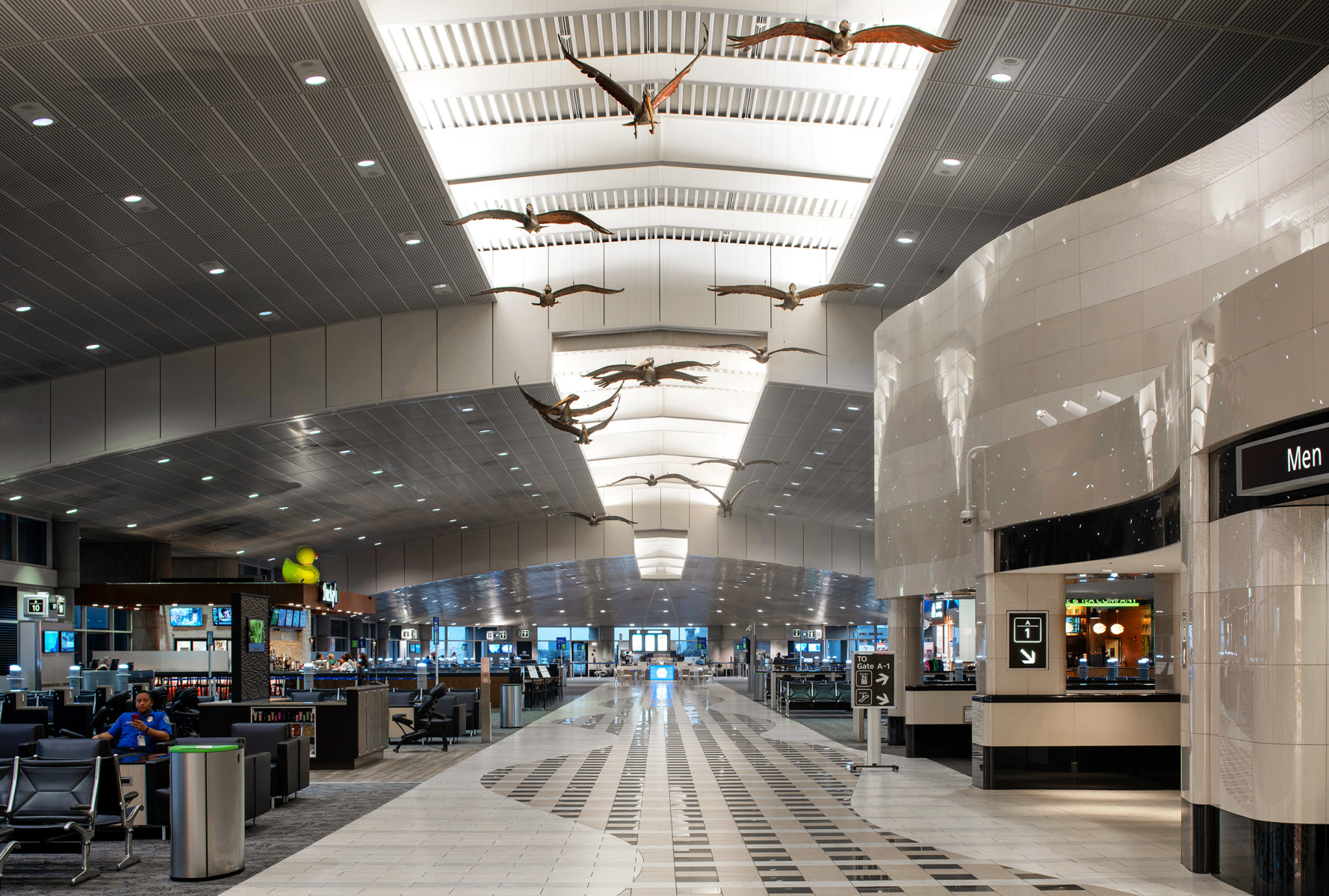
Anyone who grew up coming to Tampa International Airport in the 70s, 80s, and 90s likely remembers the copper birds, which were installed as some of the airport’s original art in 1971. Massive copper birds were hung above the airport’s main escalators, leading down three floors to the baggage claim area. At the time, the escalators were some of the longest in all of Florida, and the bird art was strategically hung above to keep passengers afraid of heights from focusing on the escalator’s long descent to the first floor. In 2018, the birds were relocated to Airside A, where they can be found flying over the north and south ends of the concourse. Each bird weighs approximately 30 pounds and has a wingspan of almost seven feet. The entire bird collection includes some 63 individual fowl of five different species, including gulls, herons, cormorants, anhingas, and pelicans.
 George Bean’s Original Office
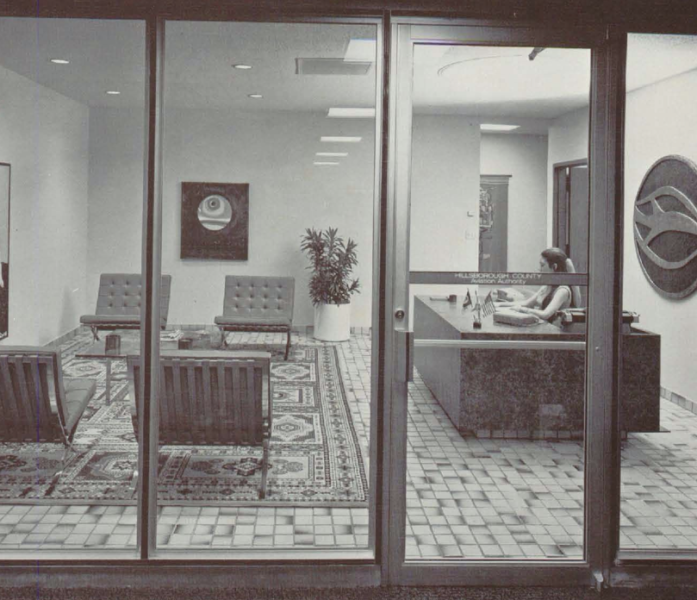
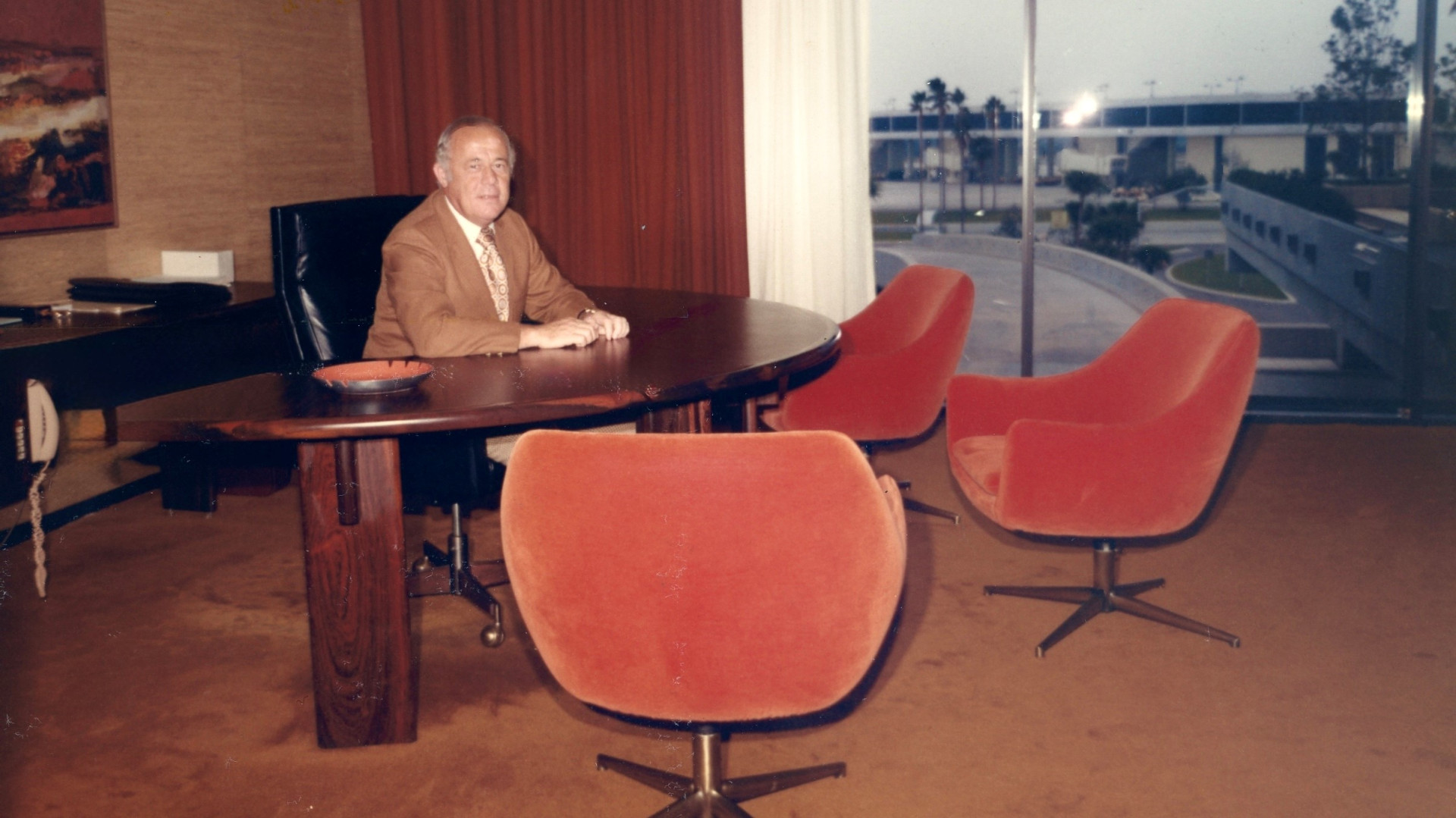
Today, the Aviation Authority’s main offices are located at SkyCenter One, but back when the airport first opened in 1971, airport leaders, including legendary original Airport Director George Bean, had their offices right inside the Main Terminal. Bean, who ran TPA for more than 30 years, took great pride in Tampa’s new airport and worked hard to make sure it would become known as one of the best in America. Bean’s office overlooked the west side of the airfield and the original Airside E. Today, that office is a conference room in the airport’s badging office, where all employees go to have their official airport IDs made.
History and Fanfare at Gate C-31
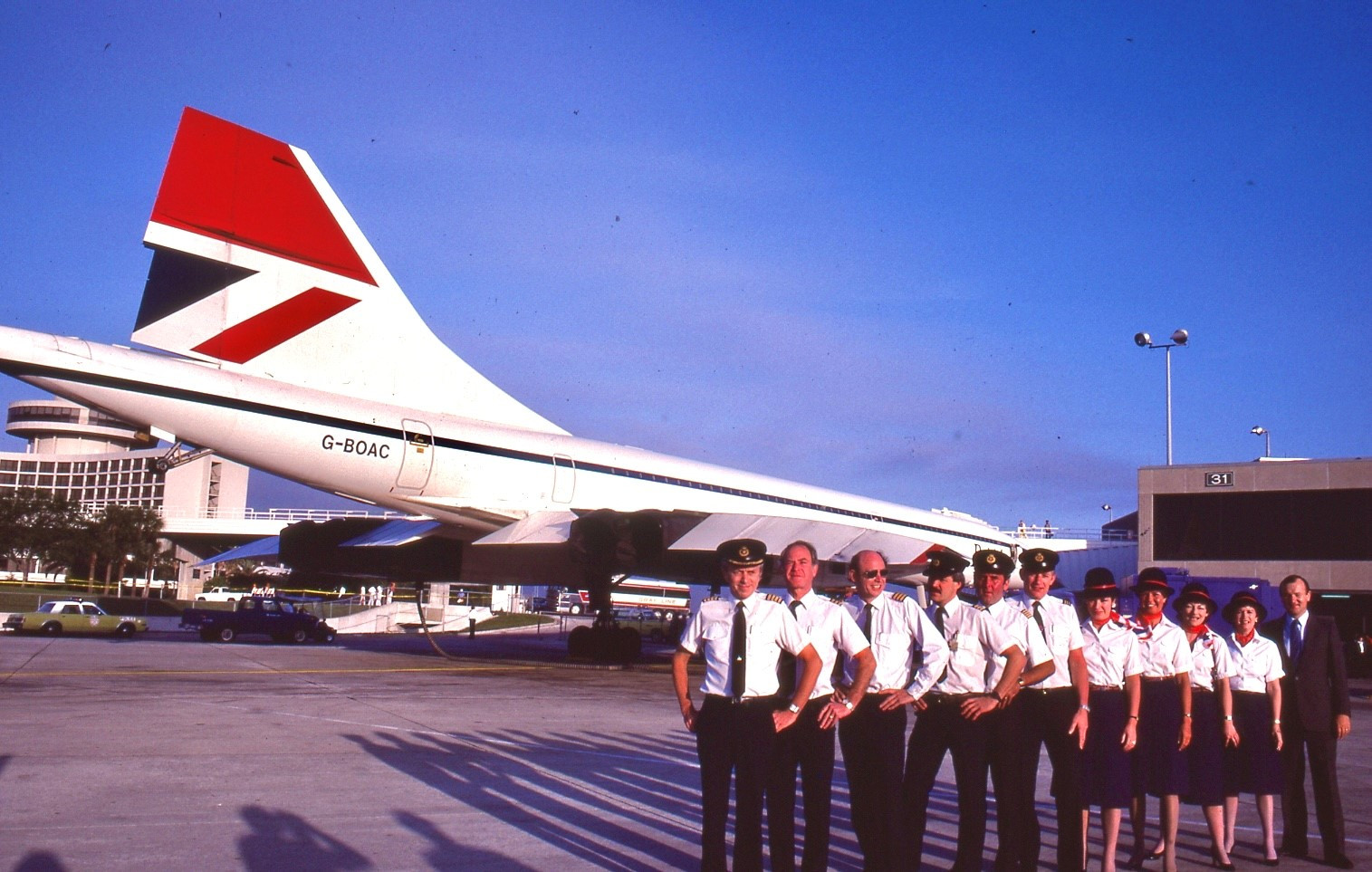
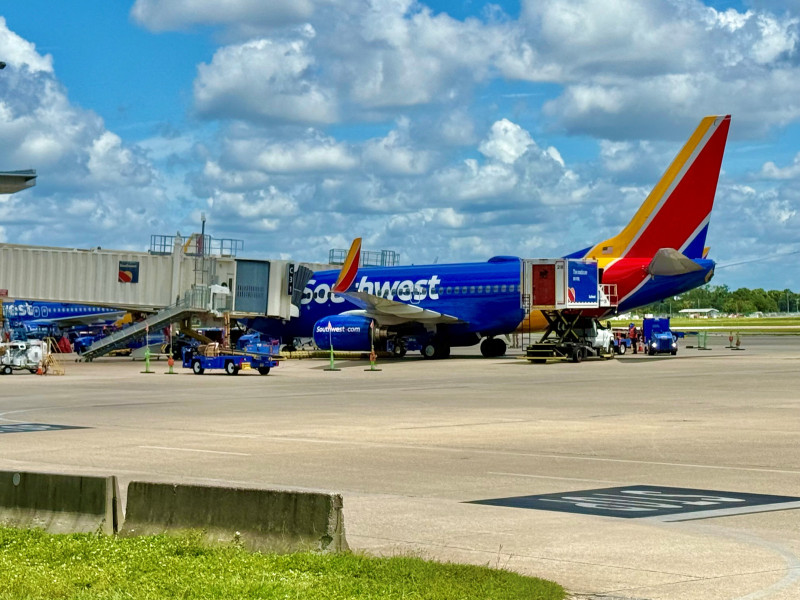 As you drive into Tampa International Airport and pass Airside C on your right, you’ll likely see a Southwest 737 parked at Gate C-31. Today, Southwest is TPA’s largest carrier and occupies much of TPA’s Airside C. But back in 1985, you would have found a much different aircraft parked at this gate. On March 30, 1985, the Concorde made its first-ever visit to TPA as the ceremonial inaugural flight for British Airways' new service between Tampa and London. As many as 30,000 people lined TPA’s parking garages and surrounding areas to catch a glimpse of the world’s most famous supersonic passenger airliner, which was photographed as it pulled into TPA’s Gate C-31. TPA’s original Airside C was torn down and reopened in 2005, but the gate remains in the same area 40 years later and will forever be a very cool part of TPA history.