Emergency crews mobilize on TPA’s airfield for mass casualty exercise
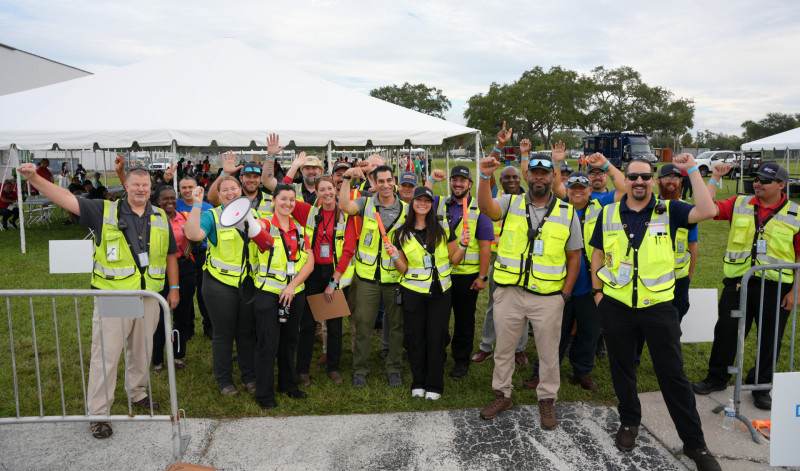
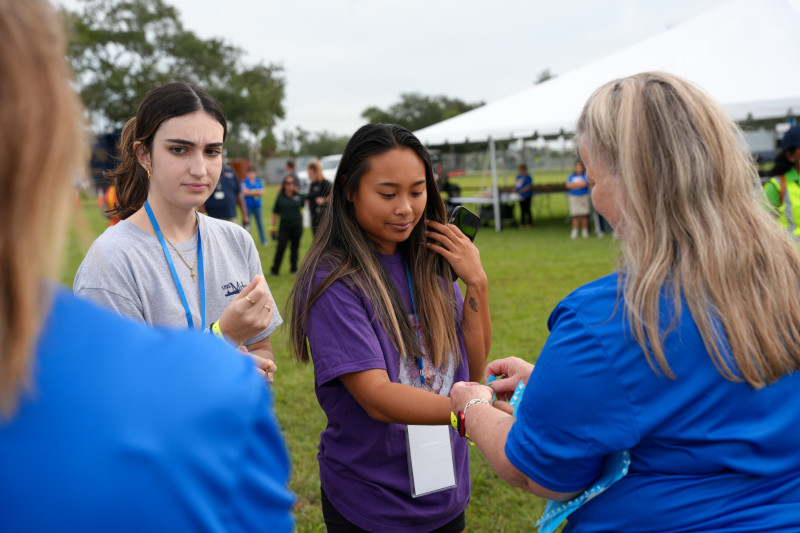
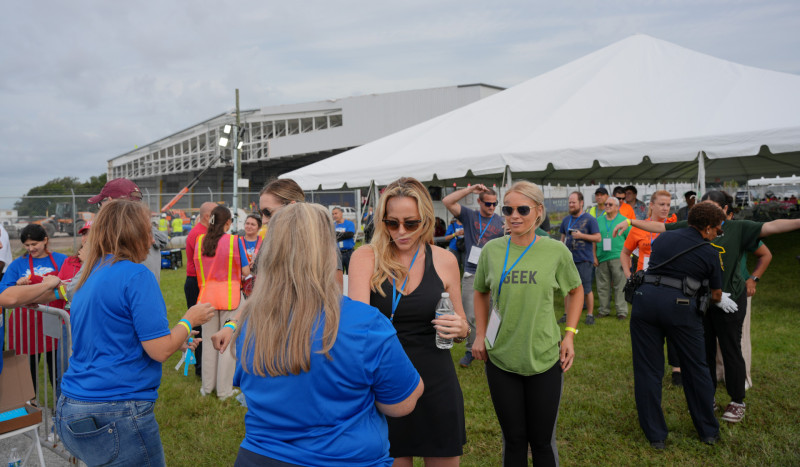
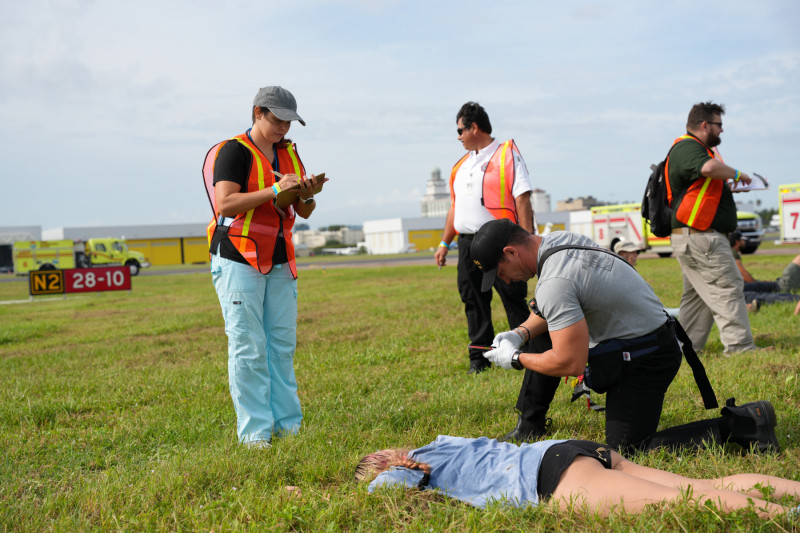
Nearly 150 volunteers, simulating injuries with makeup and shouting for help, contributed to making TPA’s 2025 Triennial Exercise as realistic as possible.
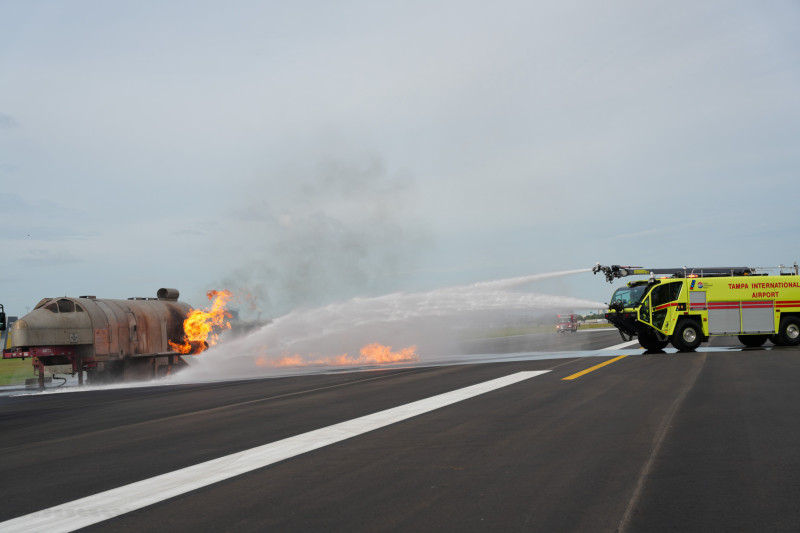
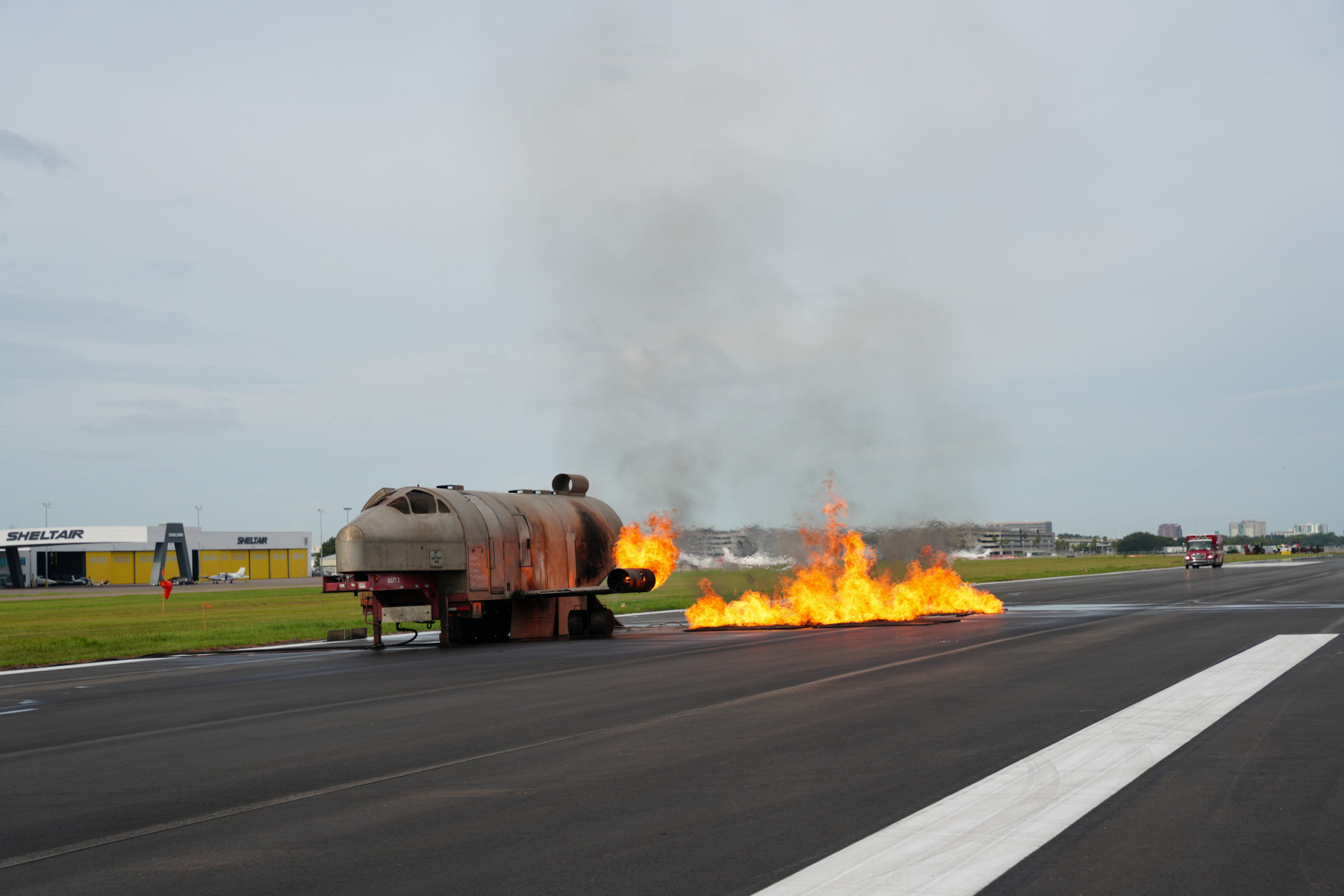
The training scenario was chilling: Two aircraft collided over the airport amidst inclement weather. One was a smaller general aviation aircraft that went down in the waters off the Courtney Campbell Causeway, while the other was a larger 737 from the fictional Jannus Airlines, which crash-landed on Runway 10-28 and burst into flames.
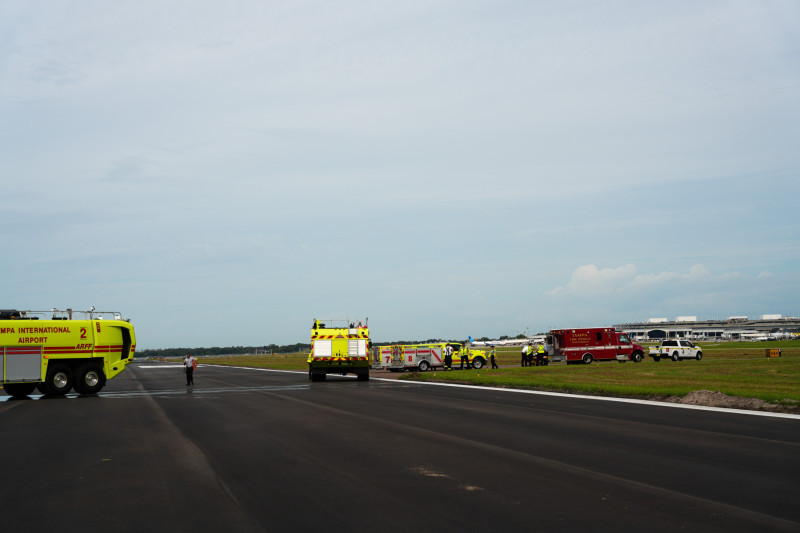
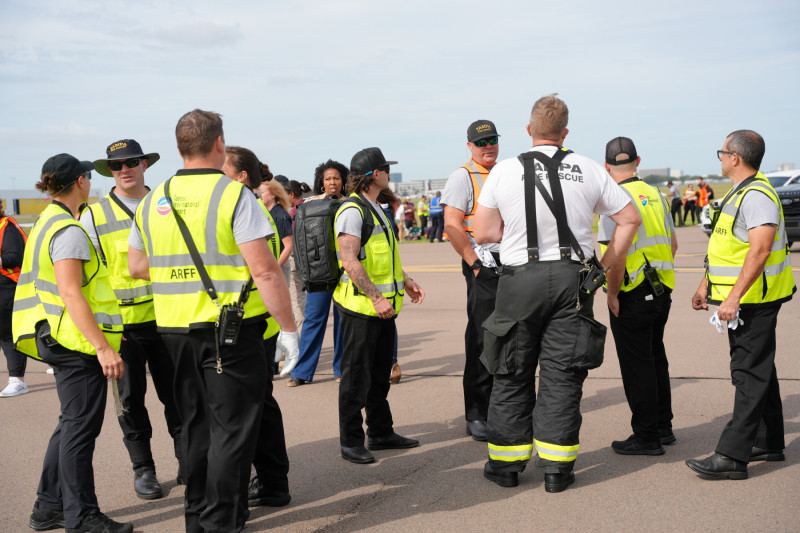
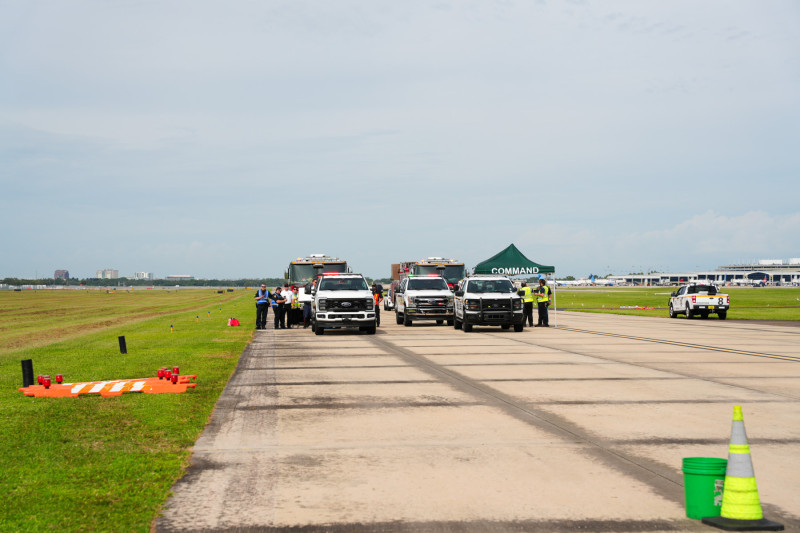
Controllers in the tower picked up the “crash phone” and dispatched Tampa Fire’s Aircraft Rescue and Firefighting (ARFF) team. Within minutes, additional crews flooded toward the airport to respond to the simulated mass casualty incident.
While air transportation is considered extremely safe, airports and their partnering first responders and emergency management agencies must occasionally go through the motions to prepare for the worst. In fact, the Federal Aviation Administration mandates that all commercial airports conduct a triennial exercise at least once every three years to maintain their certification.
Planning for this year’s TPA Triennial Exercise began more than a year ago. Following an actual midair collision near Washington National Airport in January, TPA organizers decided to incorporate a water rescue component, adding a more complex layer to the simulated response.
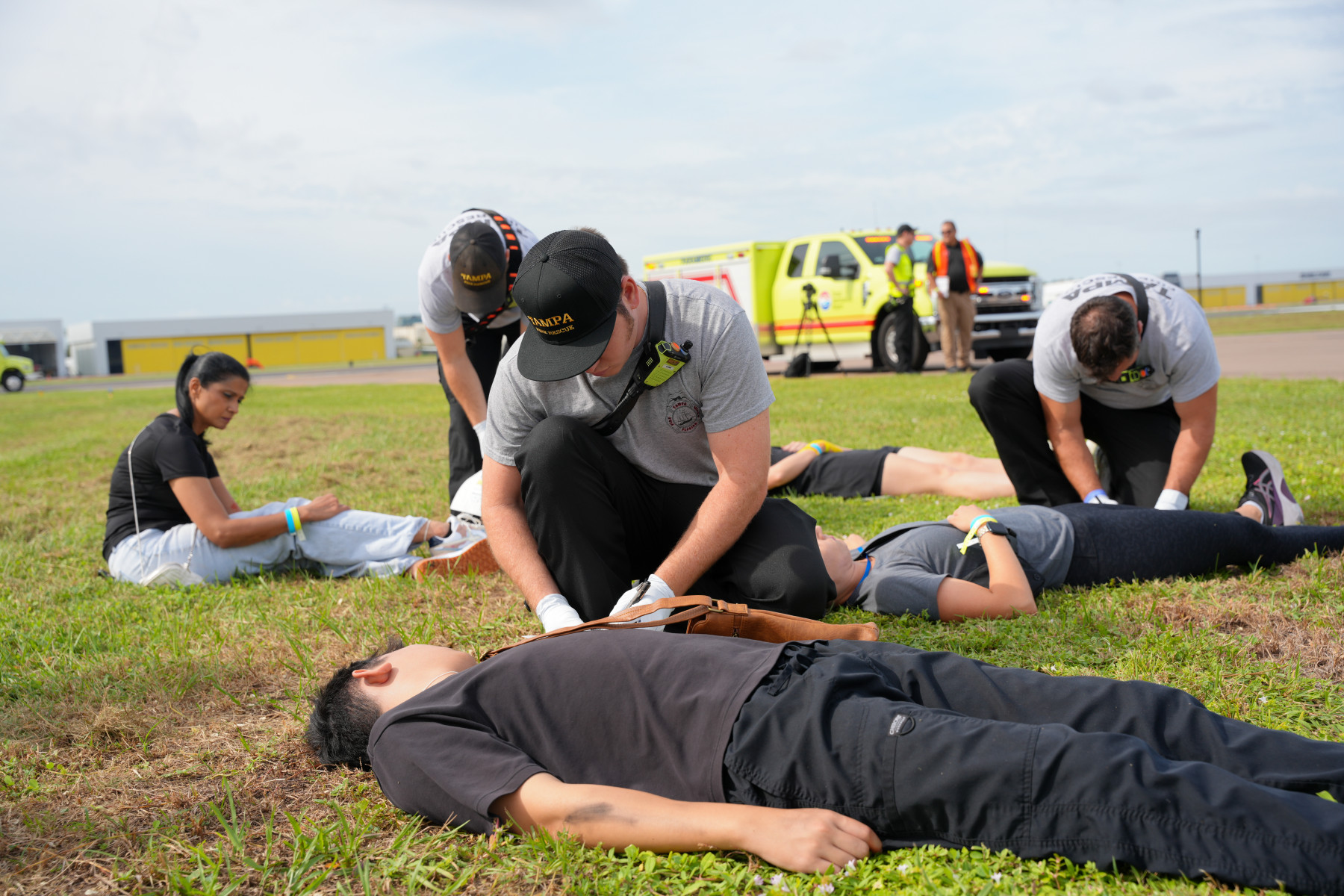
Fire departments from Tampa, St. Petersburg, Hillsborough, and Pinellas participated in the planning for Wednesday’s exercise, with assistance from the Florida Division of Emergency Management. Even the U.S. Coast Guard was involved. In total, more than 100 partner agencies collaborated for what was dubbed “Operation Double Trouble.”
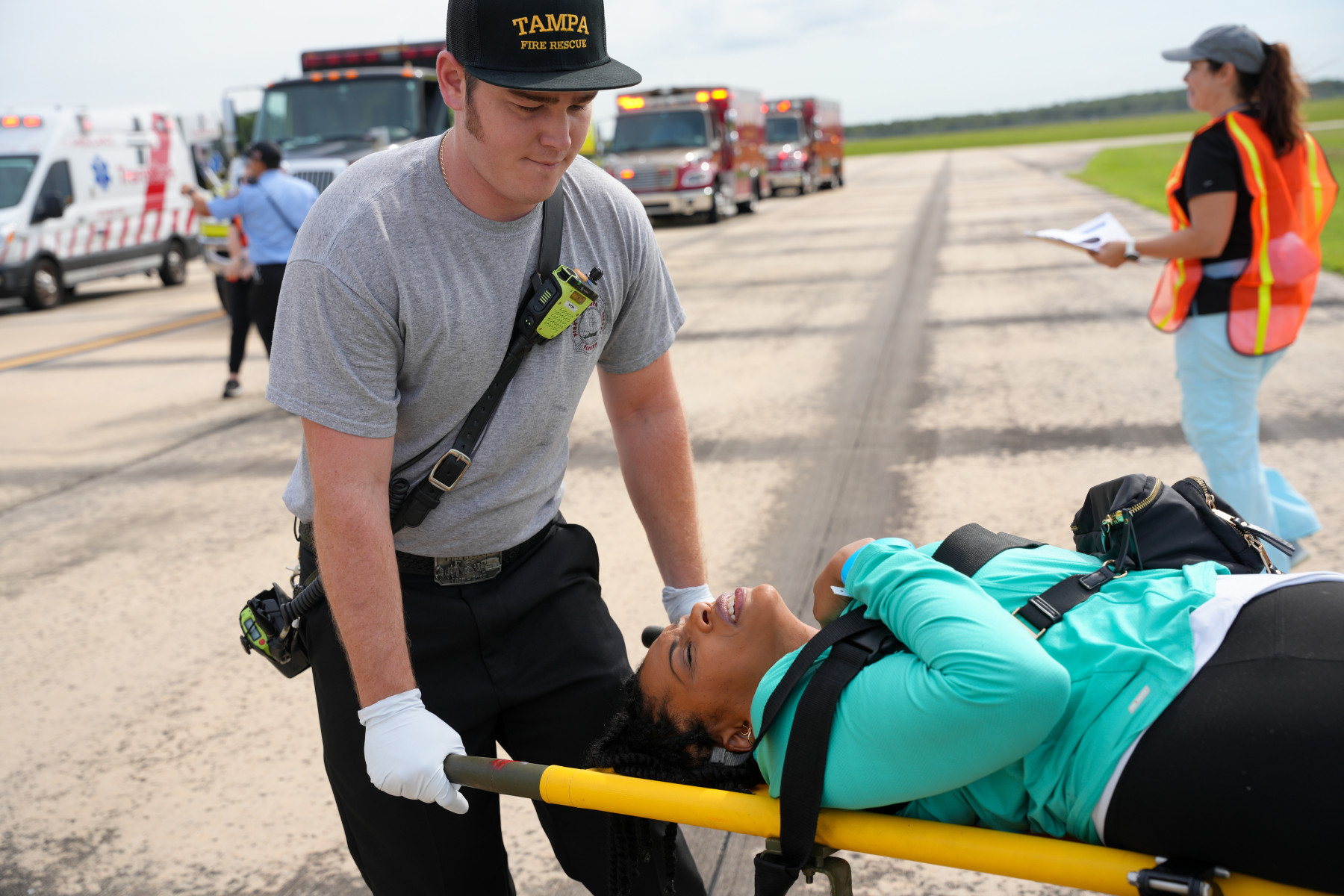
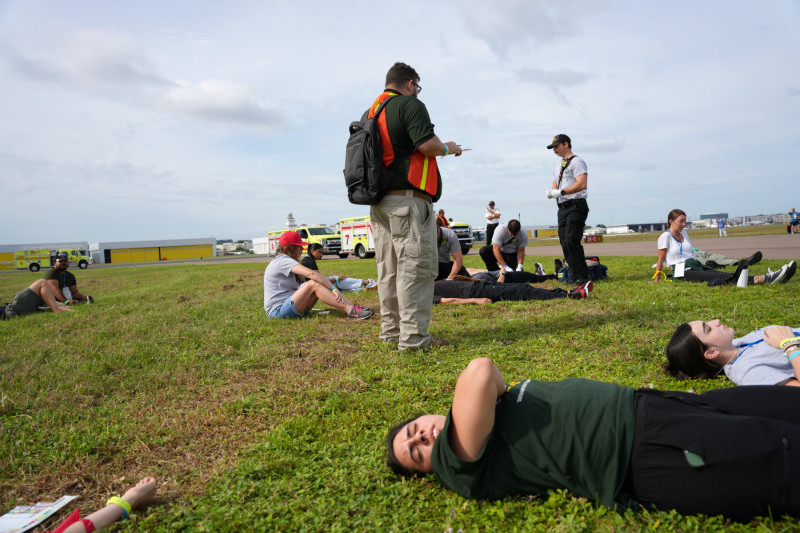
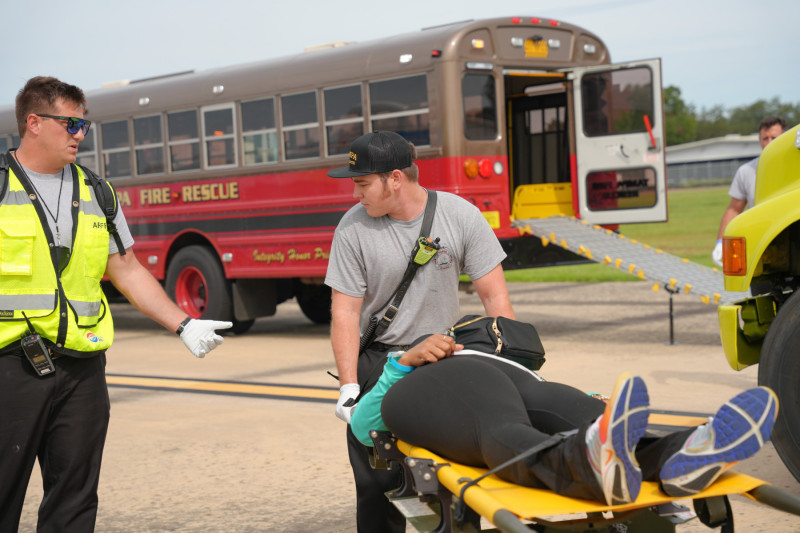
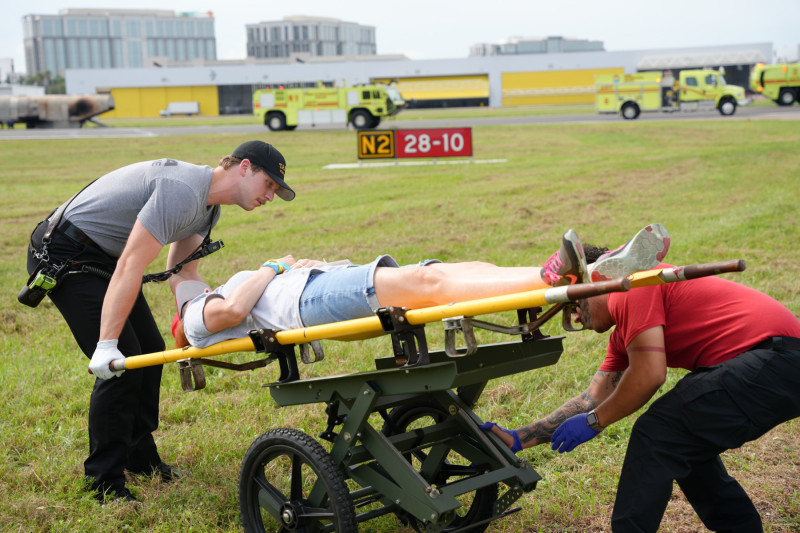
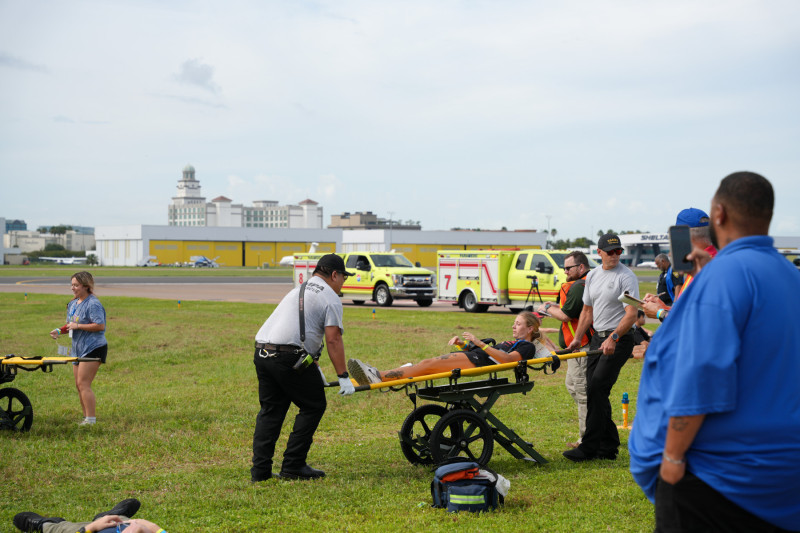
Tampa Bay area news outlets were invited to document the exercise, which included a simulated aircraft fuselage set ablaze and volunteers from the University of South Florida and other organizations lying on the grass, covered in “moulage”—the technical term for makeup used to simulate injuries.
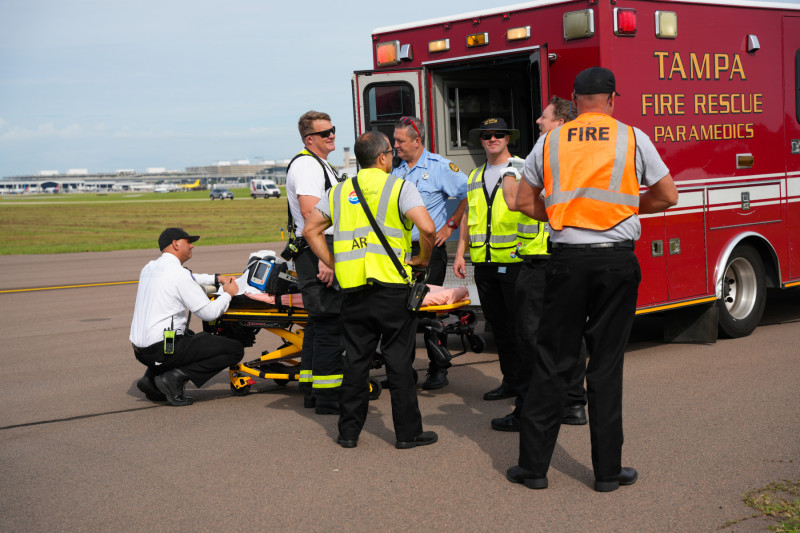
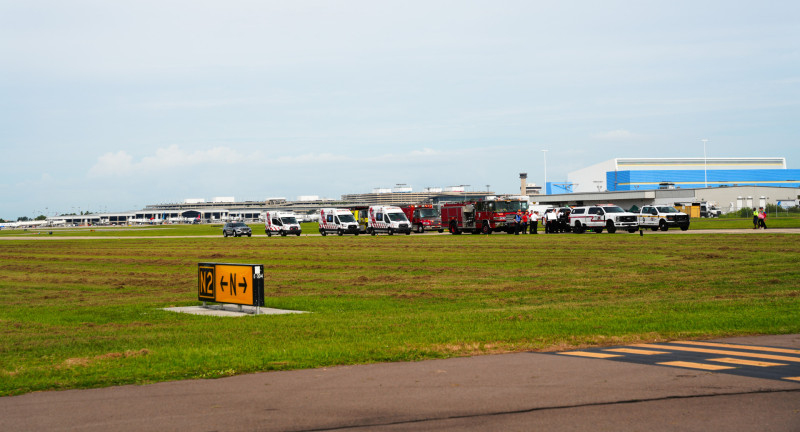
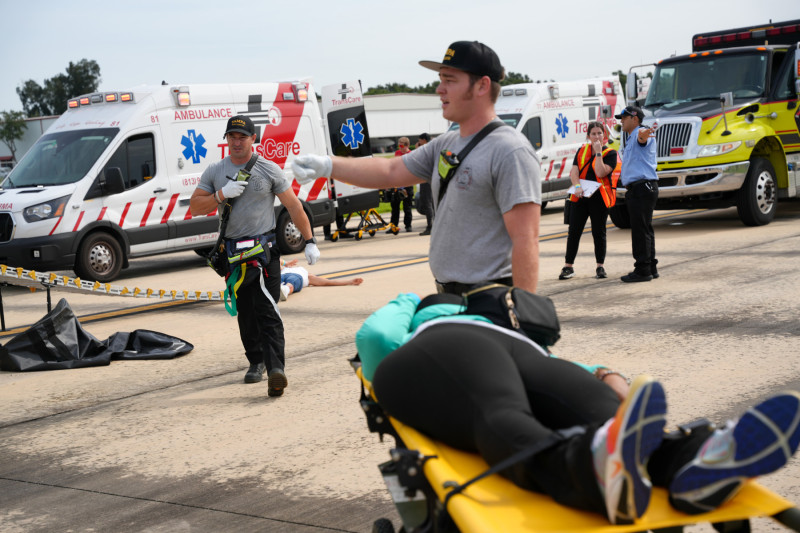
Fire truck sirens blared, with ambulances following closely behind, while radios crackled with updates and instructions from dispatchers.
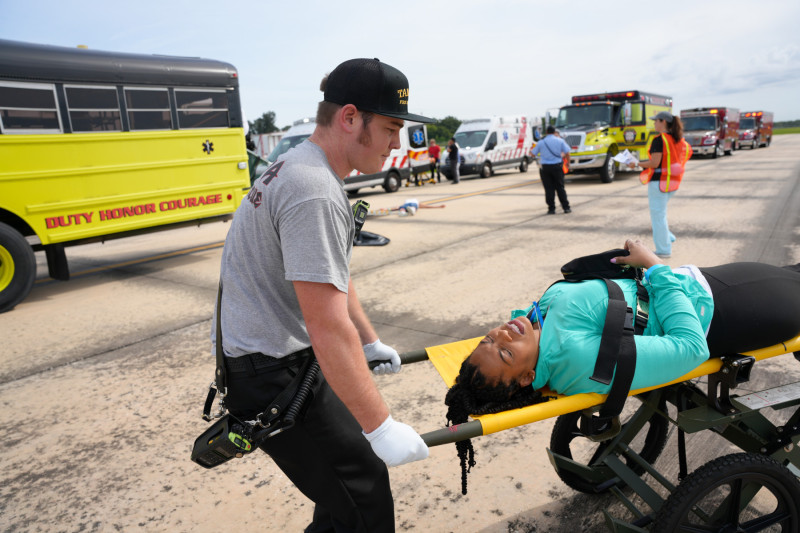
Within about an hour, the initial response concluded—the maximum amount of time emergency crews aim for to evacuate all injured individuals from the airfield. It was a scene of organized chaos.
“It takes a lot of resources and an hour of really hard work, but once we put all the pieces together, it's smooth sailing,” said Tampa Fire Rescue Chief Barbara Tripp. “Every year, we strive to improve our response.”
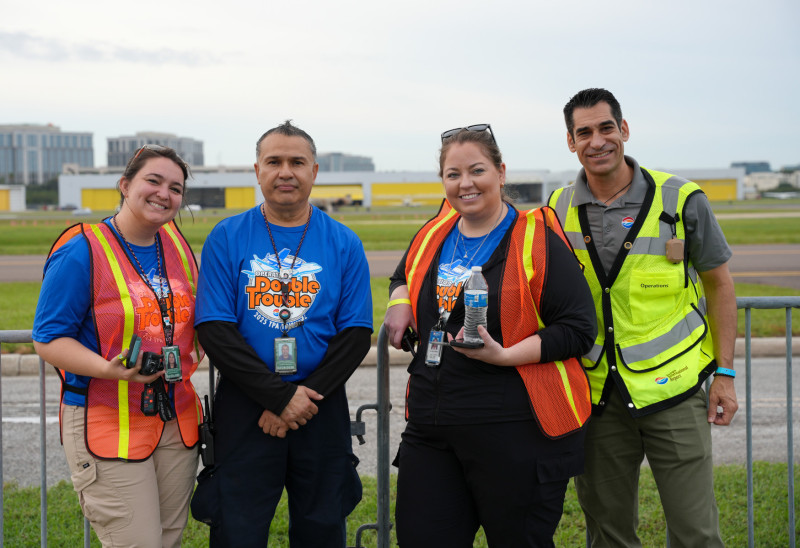
Behind the scenes, simulated loved ones of those on the flight gathered at a family reunification center, seeking information from airline and airport employees participating in the exercise. Meanwhile, in the Airport’s Emergency Operations Center, employees representing each area of the Airport’s operation convened with representatives from other agencies and the airline to monitor and strategize the ongoing response.
"This exercise was by the far the best Triennial I have seen," said TPA’s Chief Operating Officer John Tiliacos. “We had over 150 volunteers who dedicated a significant portion of their day to make this exercise as realistic as possible, and the capabilities of our Tampa Fire Rescue ARFF team, Airport Police, Airport Operations and Emergency Management, Tampa Police, U.S. Coast Guard, and community partners was on full display. I couldn’t be prouder of how well everyone executed."
Lessons learned from Wednesday’s response will be reviewed and integrated into future emergency response plans that the Airport hopes it will never need to implement.
TPA’s teams train year-round for a variety of emergencies, with the next full-scale Triennial Mass Casualty Exercise scheduled to take place in 2028.