
Florida once again makes aviation history with Advanced Air Mobility test flight over Tampa Bay
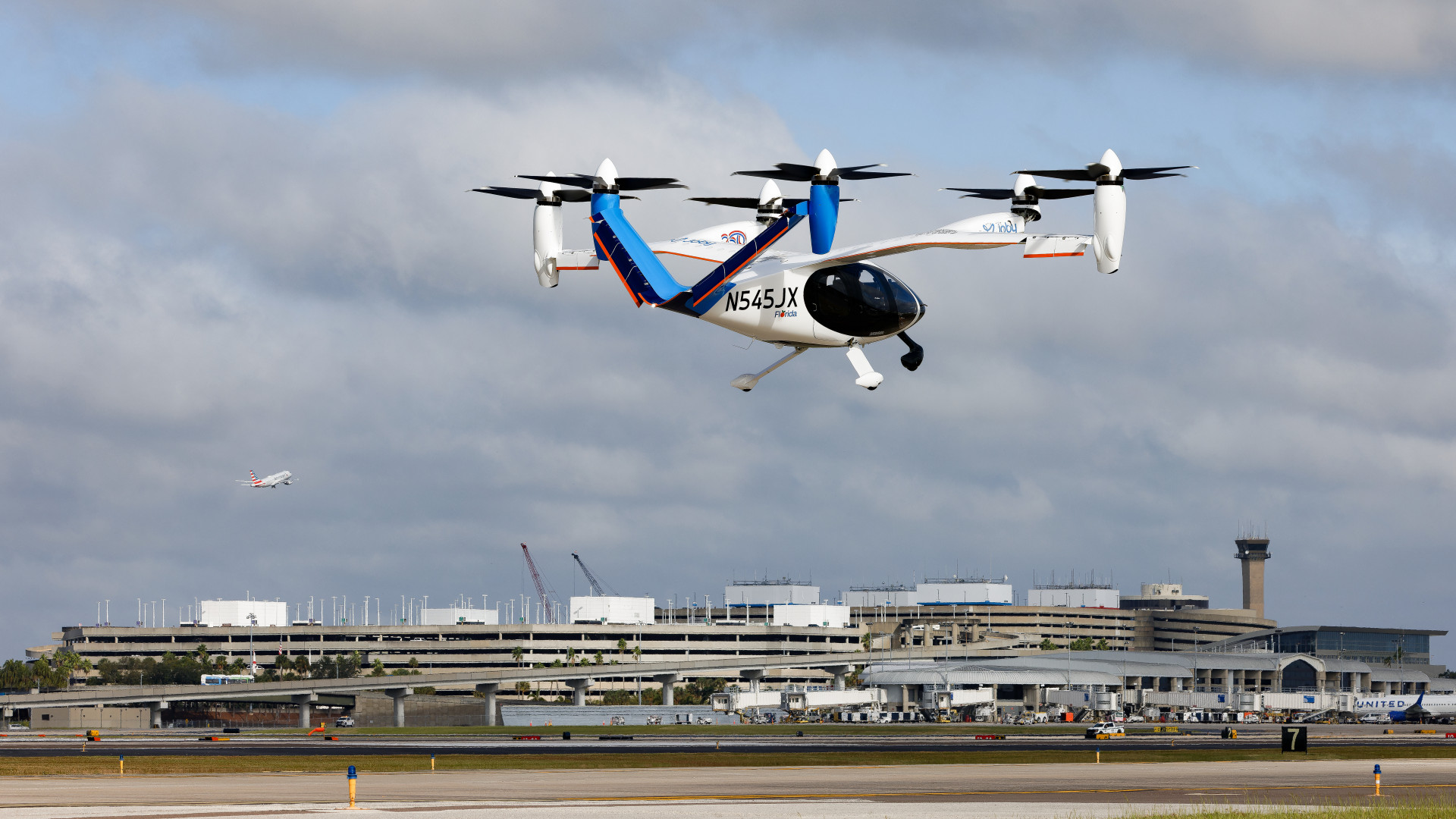
More than a century after the world’s first scheduled airline flight crossed Tampa Bay, Florida is once again positioning itself at the forefront of aviation innovation.
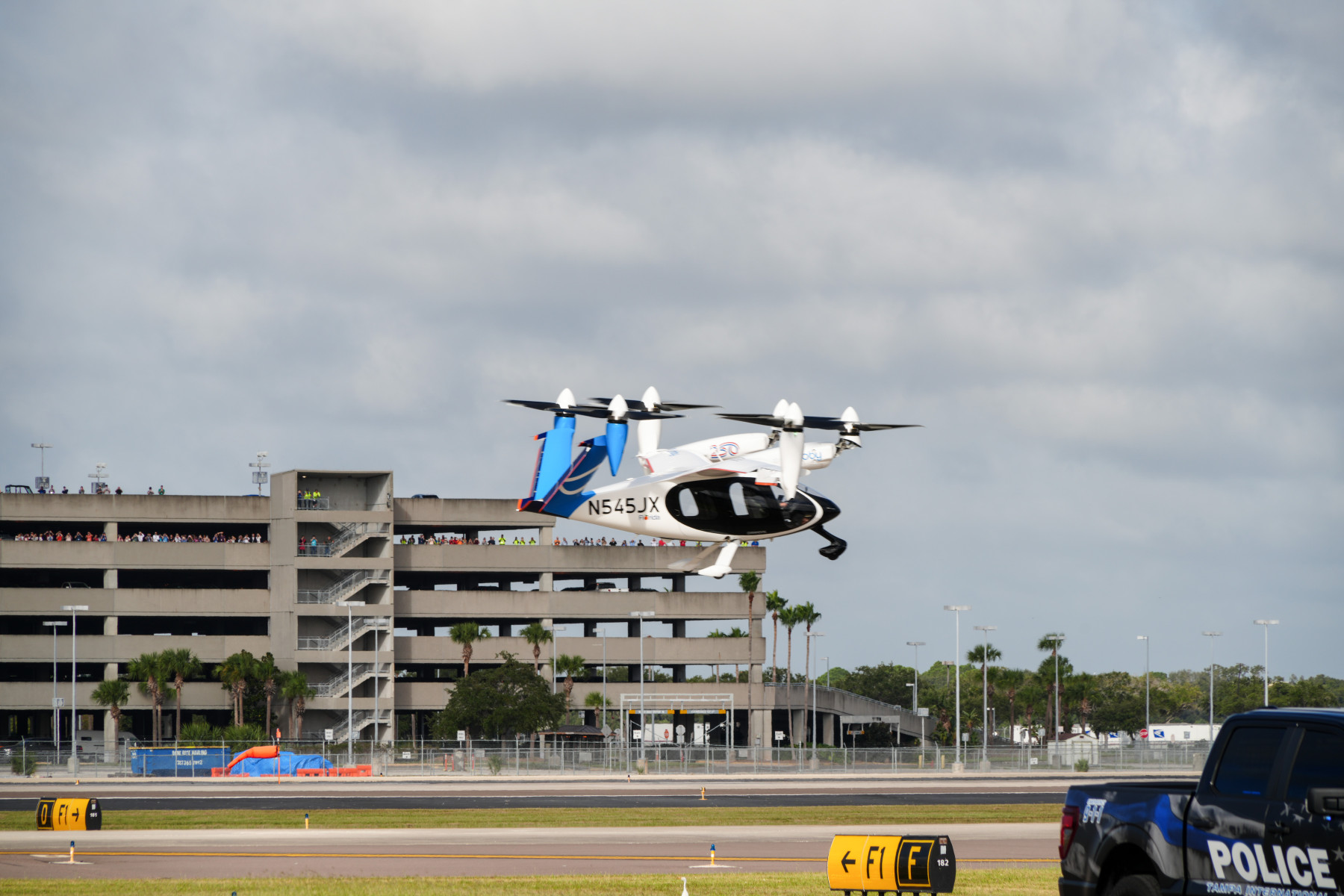
The Florida Department of Transportation on Friday hosted an Advanced Air Mobility test flight at Tampa International Airport, with two battery-powered electric aircraft demonstrating the potential of a new transportation era that leaders say could soon reshape how Floridians travel between cities, airports and major population centers.
Aircraft manufacturers Joby Aviation and BETA Technologies worked in coordination with the Federal Aviation Administration and FDOT to participate in the flight. It was part of the state’s effort to prepare for the future integration of electric vertical or conventional takeoff and landing aircraft, often shortened to eVTOLs or CTOLs.
FDOT was selected as one of eight partners across the country to be a part of the FAA’s eVTOL Integration Pilot Program (eIPP), a U.S. Department of Transportation initiative launched to accelerate the testing and deployment of these aircraft, which could initially be used for air taxis, cargo logistics, and emergency medical/organ transport.
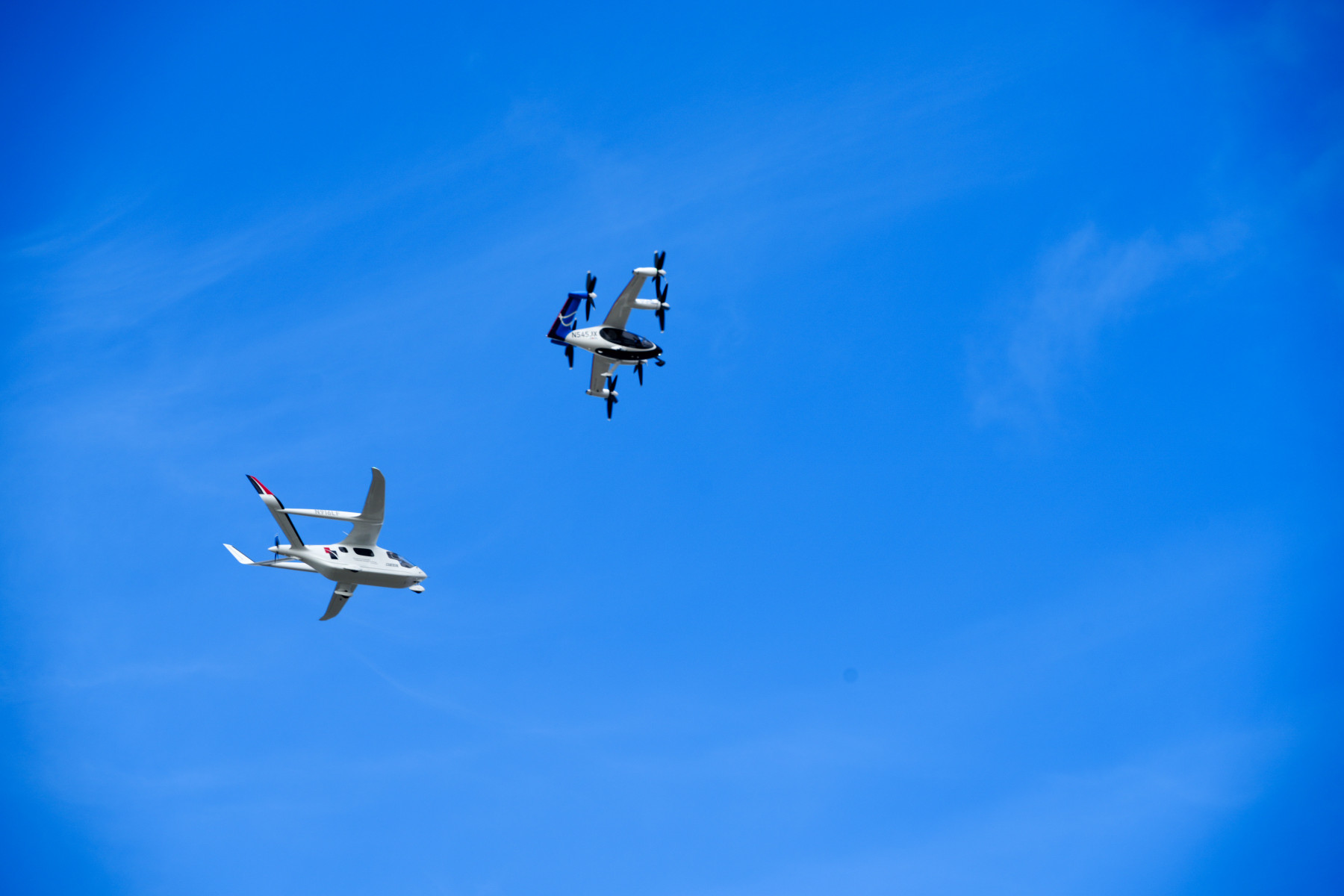
The demonstration began at Albert Whitted Airport in downtown St. Petersburg, the same general area where aviation history was made on Jan. 1, 1914, when pilot Tony Jannus carried the first paying airline passenger, former St. Petersburg Mayor Abram Pheil, across Tampa Bay to Tampa. That flight, aboard the Benoist XIV “flying boat,” is widely recognized as the first scheduled commercial airline flight in the world.
Friday’s test flight followed a similar path across Tampa Bay, drawing crowds to waterfront viewing areas in St. Petersburg and around Tampa International Airport as the electric aircraft completed flyovers and safely touched down.
“More than 100 years ago, Florida helped launch the commercial aviation industry, and now Florida is paving the way for the future of flying cars,” FDOT Secretary Jared W. Perdue said. “The work we are doing today will revolutionize the way people and goods move around the state, and this flight series will serve as an important step forward in our efforts to take highways to the sky.”
Tampa International Airport leaders said the airport is already thinking ahead about how electric aircraft could fit into the region’s transportation network.
“We are planning for the future now,” Tampa International Airport CEO Michael Stephens said. “That means identifying where these aircraft could operate on the airfield, and also evaluating the role other airports in the region — including Peter O. Knight Airport near downtown Tampa and Tampa Executive Airport — could play in an Advanced Air Mobility system.”
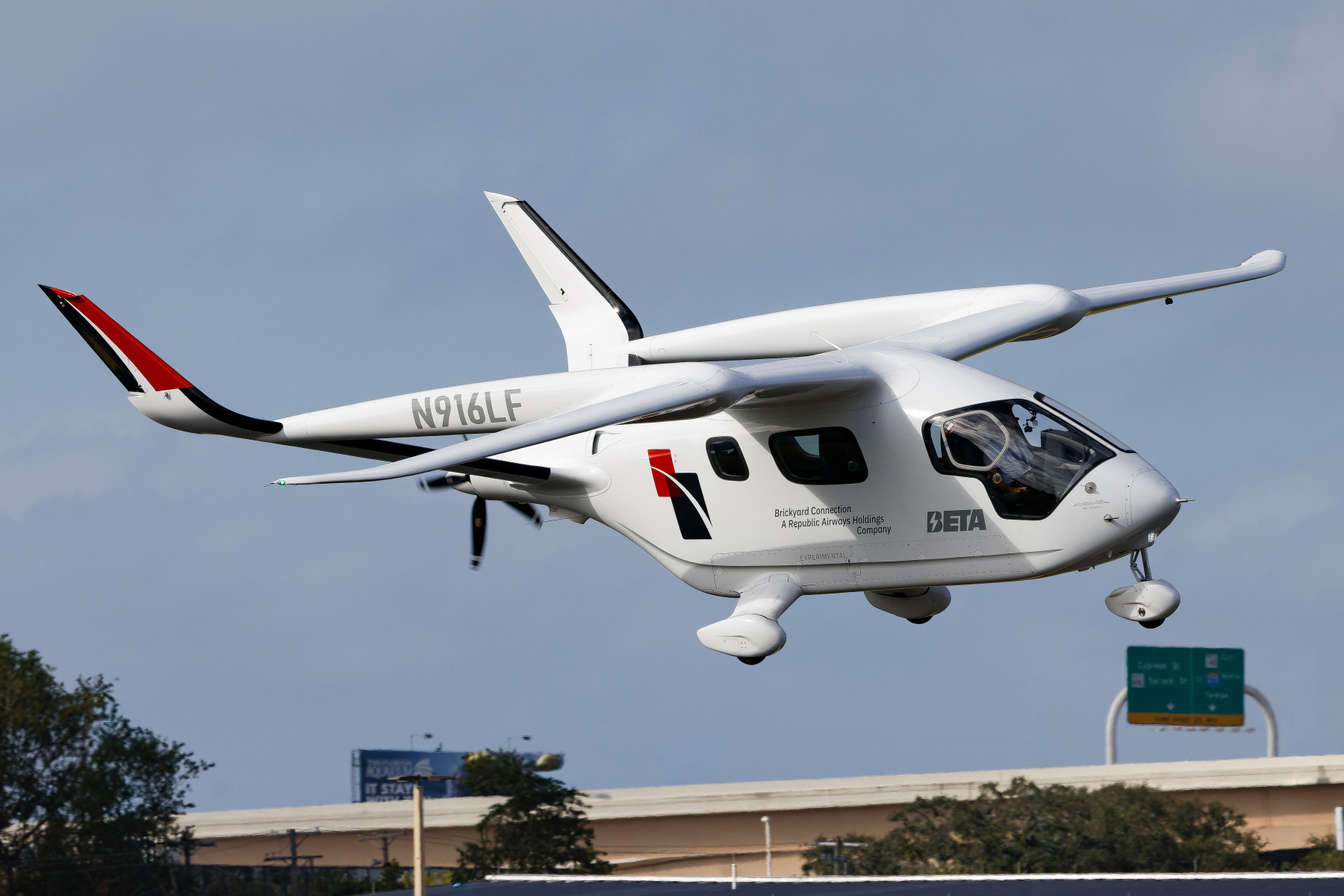
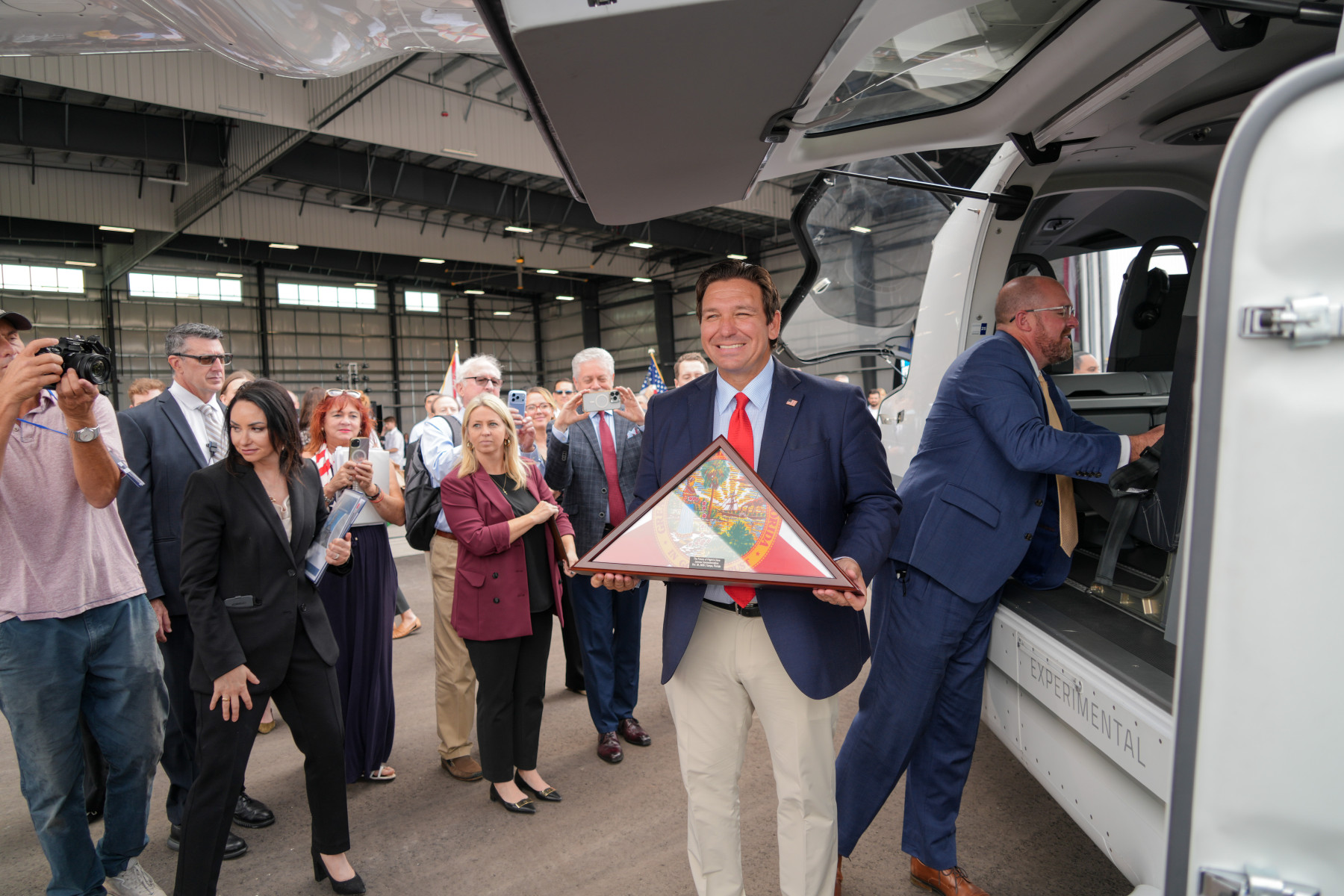
Attendees at the airport were able to see the aircraft up close and learn more about the technology, including how battery-powered propulsion could reduce noise compared with traditional aircraft.
“Florida is helping safely integrate these new aircraft into the airspace system and prove that the next great era of American aviation is already here,” said FAA Administrator Bryan Bedford. “Each flight provides crucial data and lessons learned that will help establish safety standards for everyday operations.”
FDOT says it hopes to help position the state as a national leader in advanced air mobility, opening the door to new transportation options, stronger regional connectivity and economic opportunity.
“Florida has long been a launchpad for new ideas that shape the future of transportation,” Governor Ron DeSantis said. "I’m proud that Florida is a place where groundbreaking transportation technologies can be developed and deployed. Thanks to strategic investments, education partnerships, and policies that promote innovation, we’re ensuring that Florida continues to lead the way in aviation and aerospace.”
Tampa Bay’s role in aviation history is more than symbolic. The 1914 Jannus flight marked the beginning of commercial passenger airline service, and the region has long embraced aviation milestones. Friday’s demonstration linked that legacy to a future in which air taxis and other electric aircraft could someday move passengers quietly over congested roads in a matter of minutes.
“More than a century ago, Tony Jannus made aviation history right here in Tampa Bay,” Stephens said. “Today, our region is once again helping lead the way as we explore the next great evolution in aviation. We’re proud to be part of this historic demonstration and excited about the possibilities this emerging technology holds for moving people and goods across Tampa Bay and beyond.”
The state's flight demonstrations will be among the first to utilize Florida’s Aerial Highway Network, a first-of-its-kind system that takes highways to the sky through dedicated aerial corridors that connect major hubs throughout the state.
Following along Interstate 4, the most heavily traveled transportation corridor in Florida, the Future of Flight Series will offer real-world demonstrations on how AAM can bypass roadway congestion and completely revolutionize the travel experience for Florida’s residents and visitors in this part of the state.
For more information about FDOT’s AAM initiatives, visit suntraxfl.com.