
Learn the real meaning behind TPA’s most popular art installations
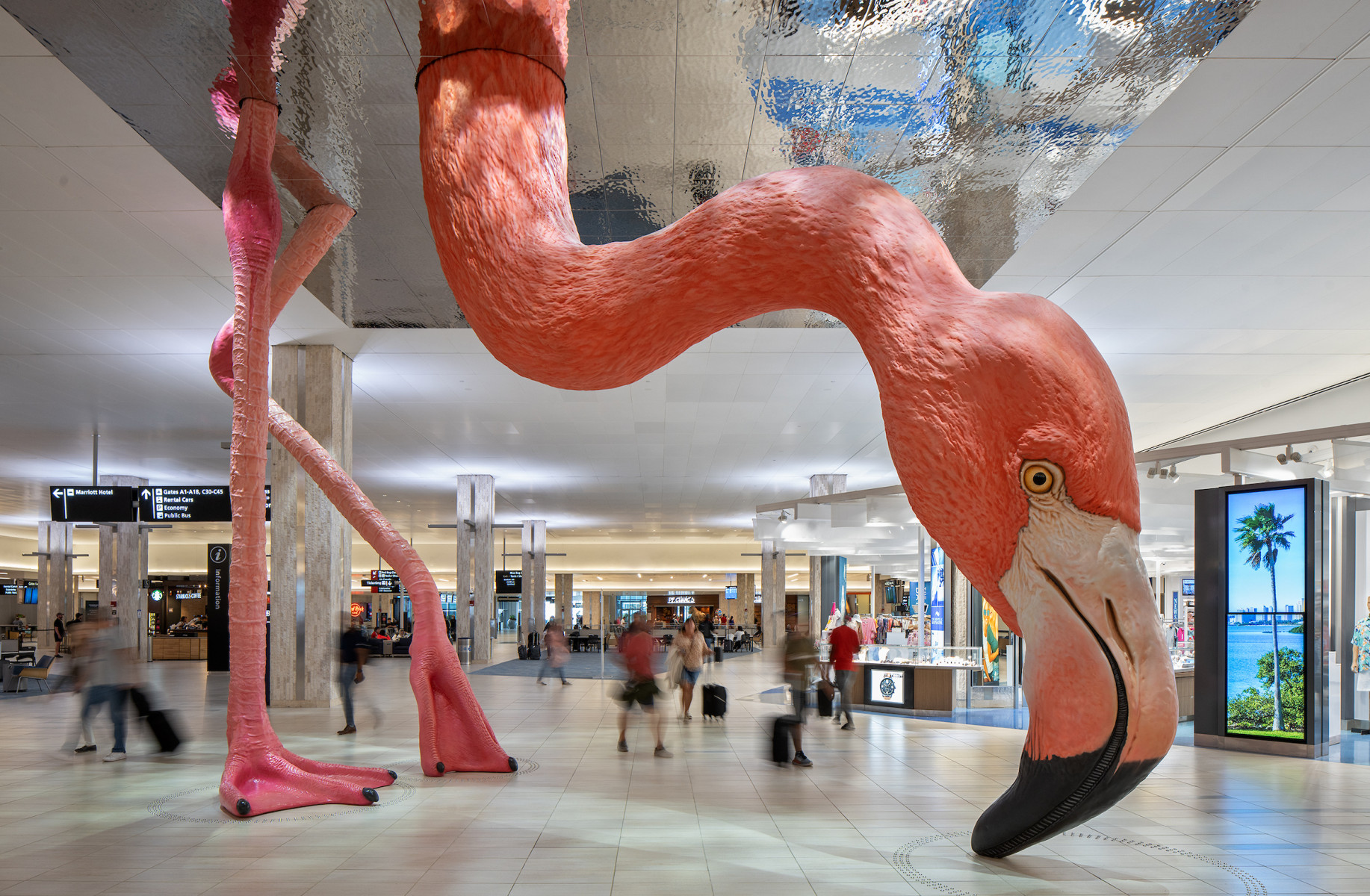
At TPA, you’ll find a collection of ladders, hundreds of turtle hatchlings, and one world-famous flamingo. Now, get the inside scoop on what the artists had in mind when creating these magnificent works.
If you know anything about Tampa International Airport, you're probably familiar with its world-famous flamingo, affectionately nicknamed Phoebe. However, far fewer people know the artwork’s actual title, "Home," as given by the artist Matthew Mazzotta. While hundreds of visitors snap selfies and photos with their kids in front of Phoebe, they may overlook a small plaque on the wall that reveals the piece's true name.
In his artist's statement, Mazzotta explains that the giant flamingo helps airport visitors explore the concept of home through the lens of both people and wildlife. The exaggerated scale of the flamingo sculpture invites travelers to reflect on their own connections to their home base while immersing them in an underwater-like environment enhanced by dynamic lighting and water-like reflections. He states that his installation “aims to restore a sense of interaction and wonder in the airport, encouraging visitors to engage with the artwork and each other in a joyful, contemplative atmosphere.” "Home" is located on Level 3 of the Main Terminal, across from the Information Desk, and is hard to miss.
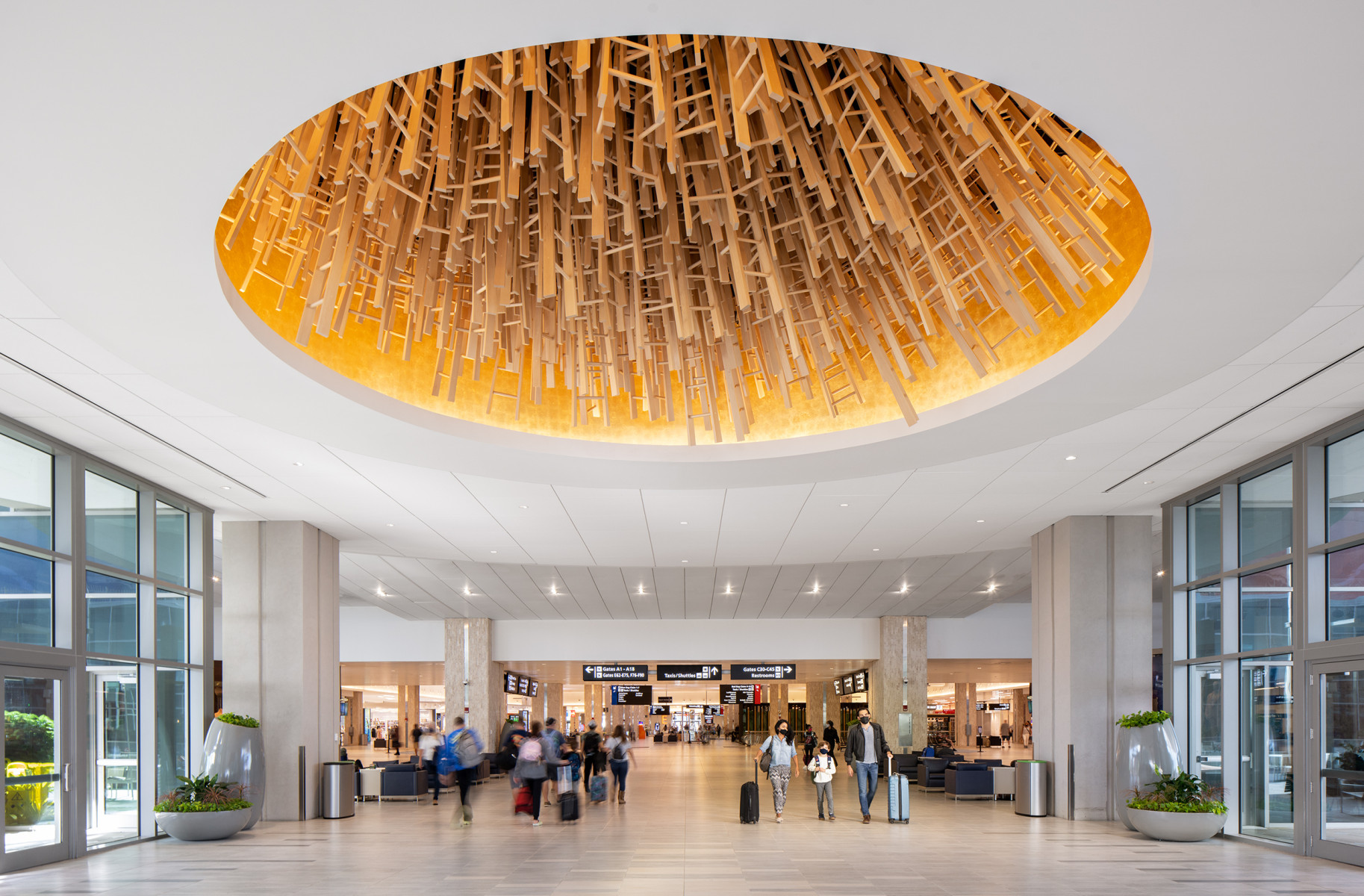
Another highly visible work of art in TPA’s Main Terminal is commonly referred to by airport visitors and staff as “the ladders.” However, the artwork’s real title is "Paths Rising," created by Aaron T. Stephan. This piece uses over 600 ladders to symbolize the diverse journeys of travelers coming together in a shared space. Stephan explains that throughout history, ladders have represented enlightenment, education, and individual paths, making them a fitting metaphor for the various experiences of those passing through the airport. The design features tapered ladders that create an upward movement, drawing the eye toward a central point above and inviting viewers to engage with the installation. Surrounded by a glowing gold leaf finish, the work reflects Tampa's rich culture and community, highlighting the connection between travelers as they enter and depart the city.
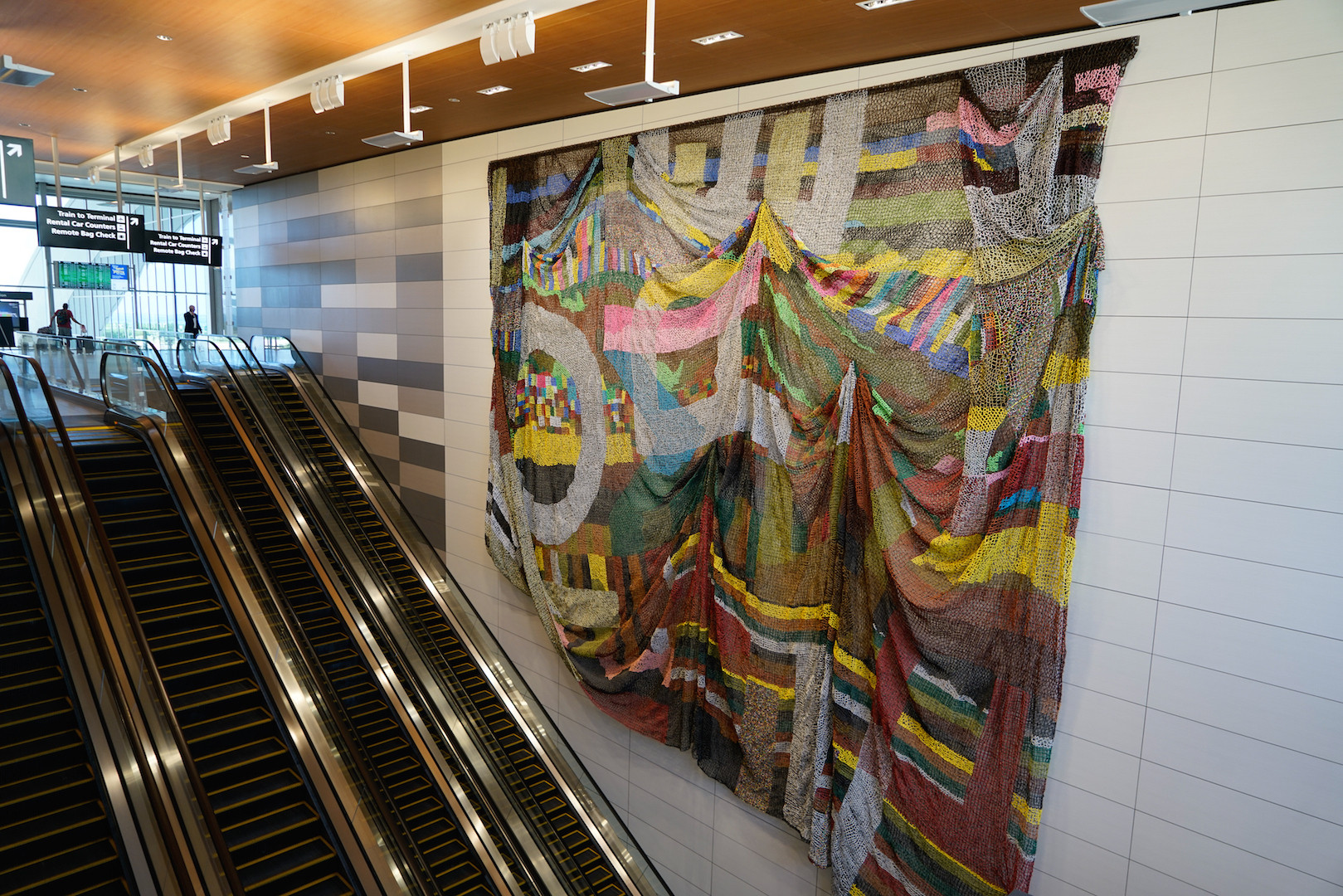
Hanging along the four-story wall above the escalators on the south end of TPA’s Rental Car Center is a 45-foot-wide, 70-foot-long hanging sculpture known as "Palimpsest." What does "palimpsest" mean? It is defined as something reused or altered but still bearing visible traces of its earlier form. This work was created by world-renowned Chicago artist Nick Cave in collaboration with Bob Faust. Cave describes his contemporary palimpsest as a monumentally scaled, handmade holder of memories—past, present, and future. “It is a conceptual web of travels, coded by color and steeped in human connection,” he explains. “It hangs as an energy field that both welcomes one home and wishes one well on their next journey.”
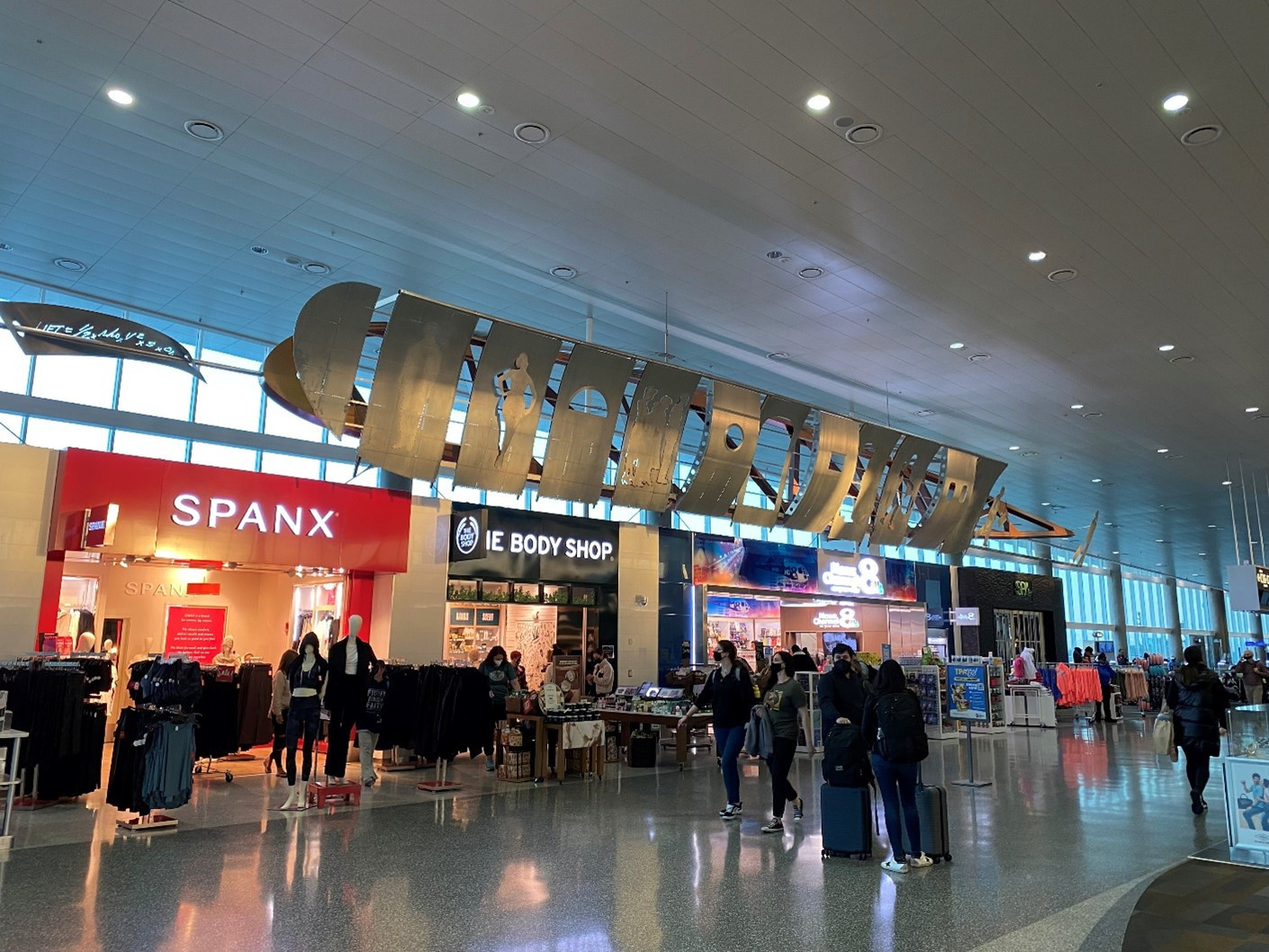
If you’re catching a flight out of Airside C, you may have noticed the aluminum wing-like artwork hanging over the shops when you exit the TSA security checkpoint. This work is titled "q" and was created by artist Christopher Still. He describes the artwork as an expression of the dynamic pressure associated with the force needed to lift an object or airplane. Cutout figures in the aluminum panels not only form a timeline of advances in airline travel but also depict travelers from different time periods. Christopher Still also created the giant oil painting hanging near the entrance to the Airside C checkpoint, entitled "Final Boarding Call," which depicts the Golden Era of airline travel.
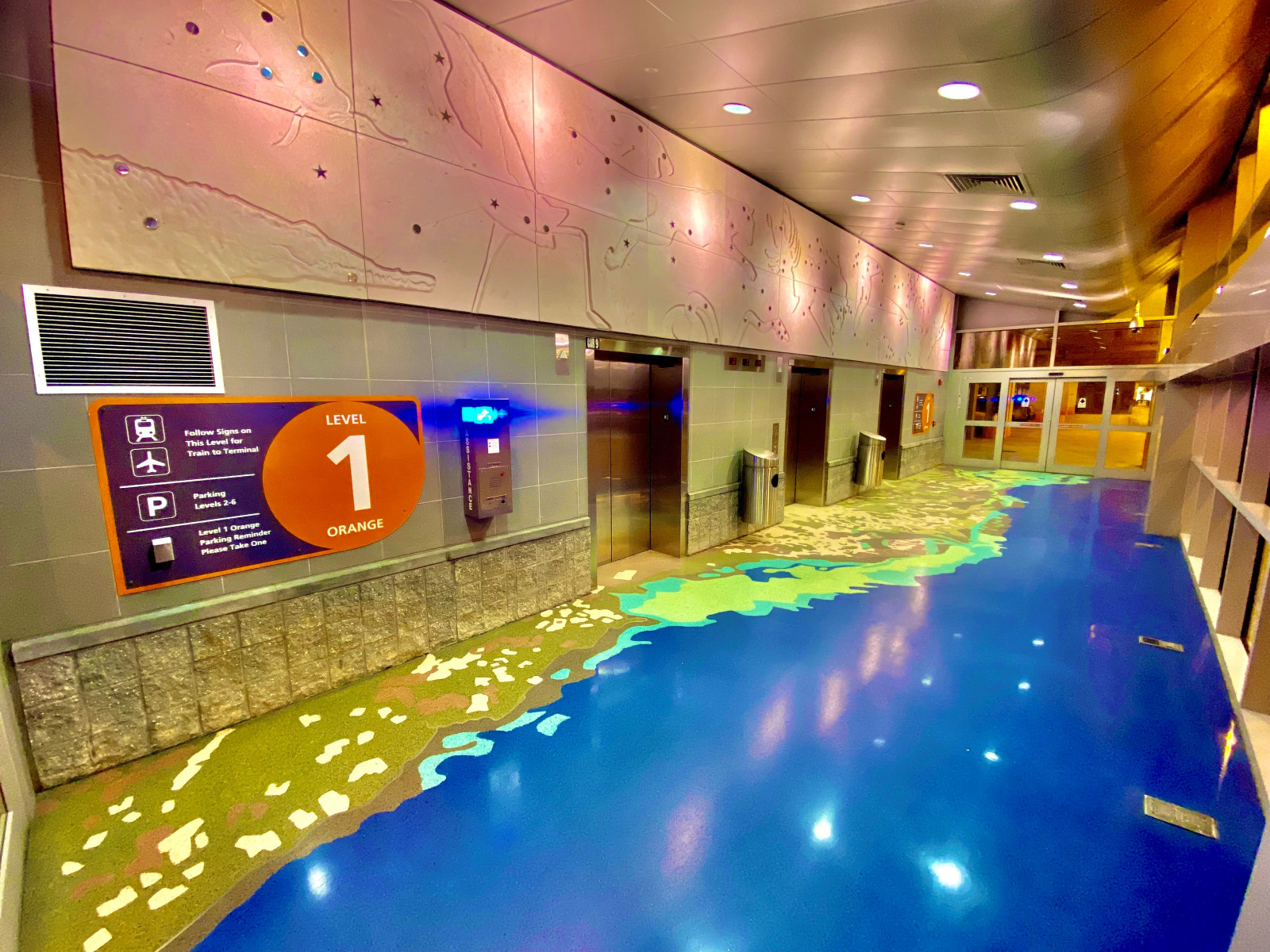
TPA’s public art collection is spread across the entire airport campus, including some of the airport’s parking garages. If you take SkyConnect out to the Economy Parking Garage, you'll find even more unique works of art making up the floors and walls of the elevator lobbies. In the orange elevator lobby, for example, you’ll find "Florida Constellations." Instead of traditional mythological creatures, each fictional constellation dreamed up by artist Wopo Holup symbolizes something specific to Florida—like the Florida panther, the flamingo, and an alligator. Pisces becomes a porpoise and catfish, while the Florida panther stands in for Leo, the native Timucua people represent the Gemini twins, and a manatee replaces the bull Taurus in this new sky chart.
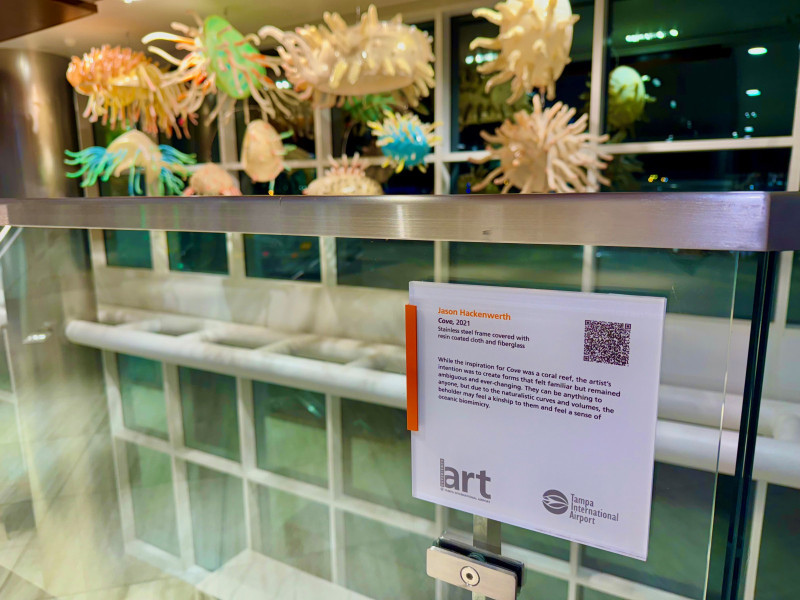 These are just a few examples from TPA’s public art collection. To learn more about each work of art, look for the plaques located on the wall near each installation. You can also visit the TPA Public Art Program webpage for more information, or even participate in TPA’s self-guided Public Art Program walking tour.
Keep an eye on TPA’s YouTube page for soon-to-be-released interviews with artists Jason Bruges and Claudia Comte as they discuss two of TPA’s newest art displays: "Cloud Ascent" in the New Red Express Curbside area and "Starfish Family | Dancing Algae," which can be found on Level 3 near the future entrance to the Airside D shuttle lobby.
Whether you’re a frequent flyer or just passing through, TPA’s public art collection offers a unique opportunity to engage with the creativity and culture of the region, enriching the travel experience for everyone. And now you'll be able to impress your travel companions with the real meaning behind TPA's art!
By the way, TPA is looking for artists to help create works of art to be included in our upcoming Airside D and other expanded areas of the Airport. We plan to launch our next call for artists in early 2026. To learn more about the process, be sure to join our artist mailing list here.